Forced to be present, free to feel: inside Phoebe Bridgers’ phone-free Lost Tour
By Addison Doornhaag \ Nov. 17, 2026
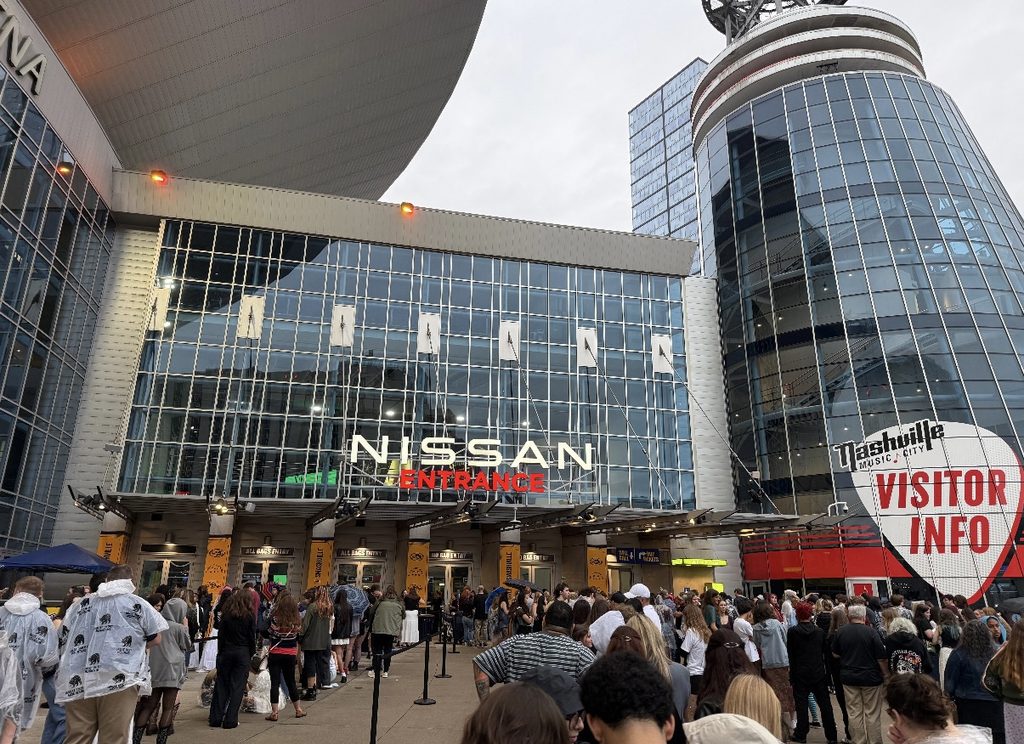
When Maryville College students Jaedyn Sudderth (’27) and Elaina Beckwith (’28) walked into Phoebe Bridgers’ Nashville show, they did what every other fan in the building had to do: they sealed their phones in a locked pouch and handed over their usual way of experiencing a concert. What happened over the next few hours raises a question that has followed Bridgers’ tour since the day it was announced. Does a phone ban force fans to be present, does it simply allow them to be, or is it an unnecessary safety risk?
In June 2026, Bridgers announced The Lost Tour — a roughly 35-date arena run across North America, the U.K. and Europe. The tour features her third solo album, Lost Weekend, released Aug. 14 and marking her first solo record in six years. The tour kicked off in Indianapolis in mid-September, with Alex G opening on the North American leg, and $1 from every ticket sold going to RAINN, an anti-sexual violence organization.
The defining feature of the tour is the device policy. Every attendee must lock phones, smartwatches and other recording devices inside a Yondr pouch after clearing security. The pouches stay sealed until the end of the night. Bridgers tested the approach earlier this year with surprise acoustic pop-up shows and planetarium listening parties for the album, so the arena tour is an expansion of an idea she had already been practicing.
Reactions have been mixed. Some fans welcomed the return of old-fashioned concert etiquette, while others raised accessibility and safety concerns about being cut off from their devices for an entire night. Both students heard about these worries, and Sudderth felt them herself.
Sudderth learned about the policy through social media, and her first reaction was anxiety rather than excitement. “I was a little apprehensive because the thought of there being an emergency and me not having my phone made me nervous,” she said.
Beckwith’s first encounter with the pouches was lighter, at least at the start. The tables of Yondr pouches made her laugh, she said, though she hadn’t researched how they worked beforehand. The humor faded a little when she realized she had forgotten to switch on Do Not Disturb. Her locked phone kept buzzing, and she couldn’t check it or silence it. It bothered her for a while before she let it go.
That small discomfort is part of the story. The adjustment wasn’t graceful for either student, which is exactly why the “forced” argument deserves a fair hearing.
Sudderth doesn’t hedge on this point. When asked whether the ban forced presence or merely allowed it, she was direct: “I definitely think the ban forced people to be present.” She admitted that without the policy, she would have behaved the way she does at every other show, filming clips and taking photos.
The pre-show hours made the change visible. Sudderth said she normally splits that waiting time between scrolling and chatting with friends. At this concert, all of it went to conversation. Beckwith noticed the same shift around her. Some people pulled out small notebooks and pens to draw or write about what they were seeing, and many others simply sat and talked with each other, something she found nice to watch.
In other words, the people in the room didn’t choose to put away their phones in a spirit of mindfulness. The policy took away the default, and something else filled the space.
That “something else” is where the other side takes its stance. Once the phones were gone, both students described an experience they didn’t resent, regardless of the fact that they had to lose a habit to achieve.
Sudderth said she could connect with the music and immerse herself fully because she wasn’t thinking about filming or worrying about capturing the perfect picture. She said the quiet made the show feel more personal, especially when Bridgers spoke about the meaning behind her songs and the vulnerability of performing them. She also pointed to the production, noting that the light and visual elements were unlike anything she had seen at other concerts, which made the night feel surreal.
Beckwith’s most vivid memory came from the B stage, where Bridgers was in clear view. Her seat’s view of the main stage had been partly blocked, so the smaller stage felt like a revelation. Bridgers talked there about the weight of her songs and the difficult subjects behind them, including the death of her father, then moved straight into “Still Standing” and “As Above.”
The silence during the outro of “Still Standing” is what Beckwith remembers the most. The whole crowd let Bridgers sing its wordless, wail-like ending alone.
“The pure emotion in her voice hit me like a truck, and I was just listening and crying,” Beckwith said. When glitter began to fall during “As Above,” she recalled, the crowd screamed the line about not having to believe in magic at the top of their lungs. “It was insane.”
No one was “forced” into that moment of collective silence…. or that roar. A phone ban can remove the camera, but it can’t manufacture tears. The policy cleared the room, and the music did the rest.
The students were honest about the trade-off. Beckwith said part of her is sad that she will never be able to rewatch footage from the night and knows she will forget some details. But the feeling of being so absorbed made that loss matter less to her.
The show’s built-in unpredictability also made the lack of footage feel appropriate. Beckwith’s “surprise song” was a demo version of a hidden bonus track, something she expects never to hear again. Because each city gets its own surprise, she sees the night as a connection belonging only to the people in that room.
The ban also changed how fans share their memories. With no clips to post, Beckwith drew quick sketches on Snapchat to show a friend, including the glitter from “As Above.” She has also seen fans recreate the concert from memory online, including one who rebuilt the Lost Weekend light show in Roblox Studio. She loves the trend and wishes she were a better artist. Sudderth, for her part, says she remembers this concert better than most she has attended because nothing distracted her.
The disorientation had a flip side, too. Beckwith said that without phones or watches, her group lost track of time, especially between the opener and Bridgers.
“It kind of made it feel like we stepped into another dimension for a couple of hours,” she said. “No concept of time, just music and lights and emotion.”
So does the ban force presence or allow space for it? Based on these two accounts, the honest answer is both, in that order. The pouch is the force. It removes the option to film, scroll or check in… and Sudderth is right that most people, herself included, wouldn’t have given it up on their own. But the presence that followed, the silence, the crying and the singing, was something the audience chose to do once the alternative was gone.
The students also agree that the policy comes with a condition. Sudderth supports more phone-free events as long as artists take proper safety precautions. Her early nervousness faded because the venue had plenty of security, and she felt completely safe inside.
Beckwith summed up the night in a single sentence: “A few hours where nothing mattered, only getting lost in Phoebe and her music.”