Regional Visit: Big South Fork National River & Recreation Area
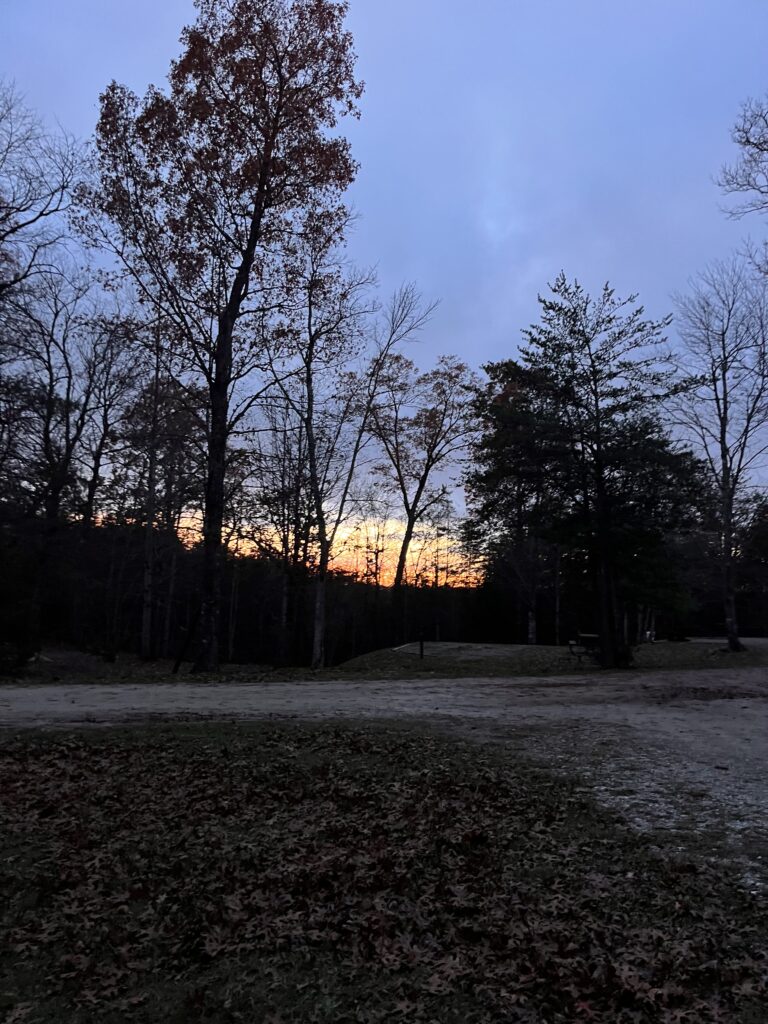
Mid-November camping is a risky choice in an area with weather as notoriously unreliable as Appalachia, but the foliage and wildlife abounding during this preparatory season make it oh so rewarding. Near last semester’s close, I decided that I couldn’t wait until spring had sprung and wanted to brave the elements in search of a weekend retreat– both a celebration of and detox from the hectic school season.
In light of the devastation to the ecosystem and landscape in Southeastern Tennessee and the Carolinas incurred by hurricane and flood damage, I ventured northwards into Kentucky to camp in Big South Fork National River & Recreation Area, specifically their Bear Creek Horse Camp. It is one of five campgrounds that Big South Fork boasts, and one of two horse-friendly campgrounds on the recreation area.
Although I wasn’t bringing an equine camping buddy, I chose Bear Creek in hopes of getting to pet those of our camp neighbors, and maybe even feed them apples and carrots if I was lucky. So, when my camping partner and I arrived to find that we were the only inhabitants of the campground for the weekend, we were both delighted and slightly disappointed.
The solitude of the campground was undeniably peaceful, however, and we soon felt right at home. The campground provides a clean, welcoming facility with bathrooms and showers, and we took advantage of the heat in the building multiple times over the chilly weekend.
Each campground also has a power amp, fire pit, and horse tie-ups. We were visited by rangers twice over the weekend, a comforting reminder that while we felt remote, help was nearby if we needed it.
After a quick venture into town to purchase local firewood due to an unexpected rain shower that made the brush around the campground damp and less than ideal for starting a fire, we set out to our first hiking destination: Split Bow Arch.
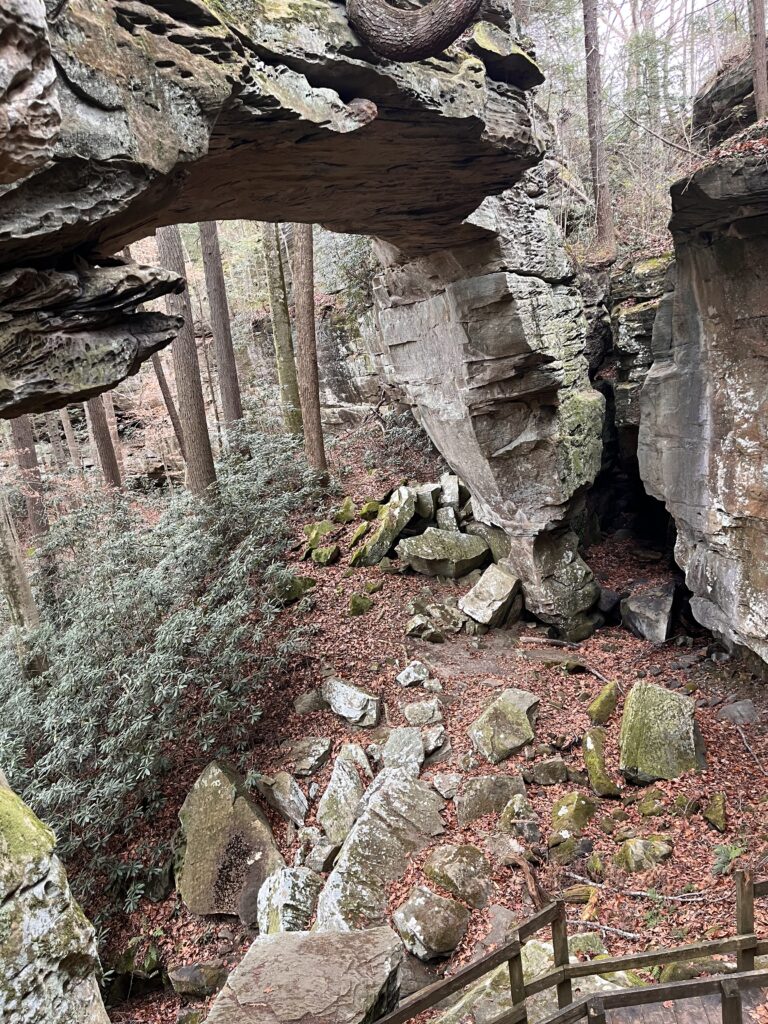
Close to a mile round-trip, the loop didn’t disappoint. Incredible rock formations and crevices made the summit feel like a natural cathedral, complete with ornate arches and filtered light through the colorful fall foliage reminiscent of stained glass.
Returning from the hike and starting our fire, the next order of business was collecting more sticks and twigs for the following day before the frost or dew got in our way.
As I wandered through the underbrush behind our campground, dragging branches and sticks into a pile, I wondered if the task would have been as enjoyable if it was something I had to do; I knew that despite the illusion of wilderness around me, if I got too cold or too hungry modern amenities were truly only moment away. Even though we “needed” to start a fire, I was ultimately collecting firewood because I wanted to.
I felt the irony of the fact that we paid $30 to recreate living conditions that used to be an unavoidable reality for people, a lifestyle that centers around figuring out how to live in harmony with, and reliant on, nature.
This implies something I have internally felt for some time: humans have an innate draw to and need for connection with nature. So much so that we leave the comfort and stability of the civilization we have spent millenia destroying wilderness to create, just to reenact a symbiotic relationship with nature that is no longer available to us thanks to that very destruction. Ironic, indeed.
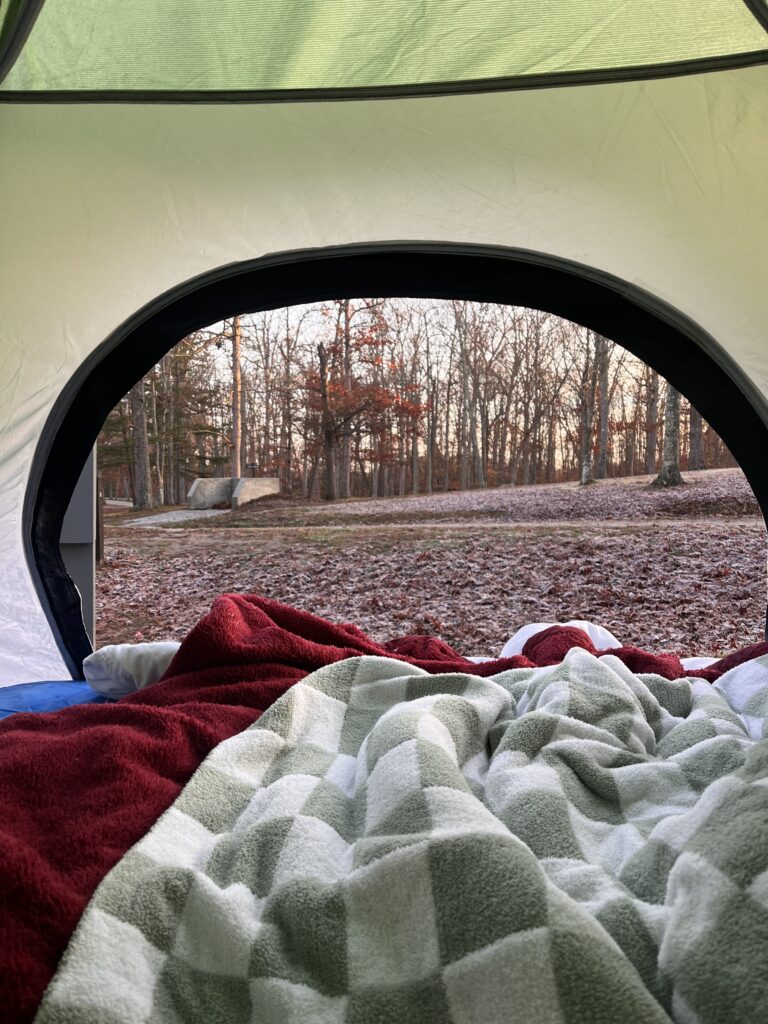
Showered, fed, and bundled up, I knew as I climbed into the tent that I was going to sleep well. And sleep well I did, to the point that when I awoke to a frozen nose and frosted eyelashes I was shocked the cold hadn’t woken me sooner. It was hard for me to pull myself away from the comfort of my blankets and sleeping bag to face the cold morning air, but the slow warmth creeping across the horizon promised a beautiful day for our second hike, Blue Heron Loop.
More daunting at over six miles and with 862 feet of elevation gain, this hike is one I would recommend to more experienced hikers. The trail was well marked and accessible, however, and we enjoyed the chance to soak in the forest thanks to the slower pace compared to the quickness with which we completed Split Bow Arch.
All considered, Bear Creek Horse Camp was a wonderful place to spend a weekend. I was, however, left with the same feeling of discontent as we departed that I often get after venturing out into nature.
There shouldn’t be such a delineation between our everyday lives and the time we spend in nature. A perk of camping for so many people is that it allows them to escape from the stresses of society, but if we could learn how to incorporate pieces of symbiotic, eco-friendly living, we could actually bring this connection to nature and all of its benefits to ourselves and begin living alongside wilderness, instead of separated from it.
This hands-on experience allows us to see firsthand exactly what our lifestyle does to our environment, and getting up close and personal with the consequences of our actions is a crucial step in making positive change to those actions.