National administration change and recent executive orders escalate fear and anxiety at MC
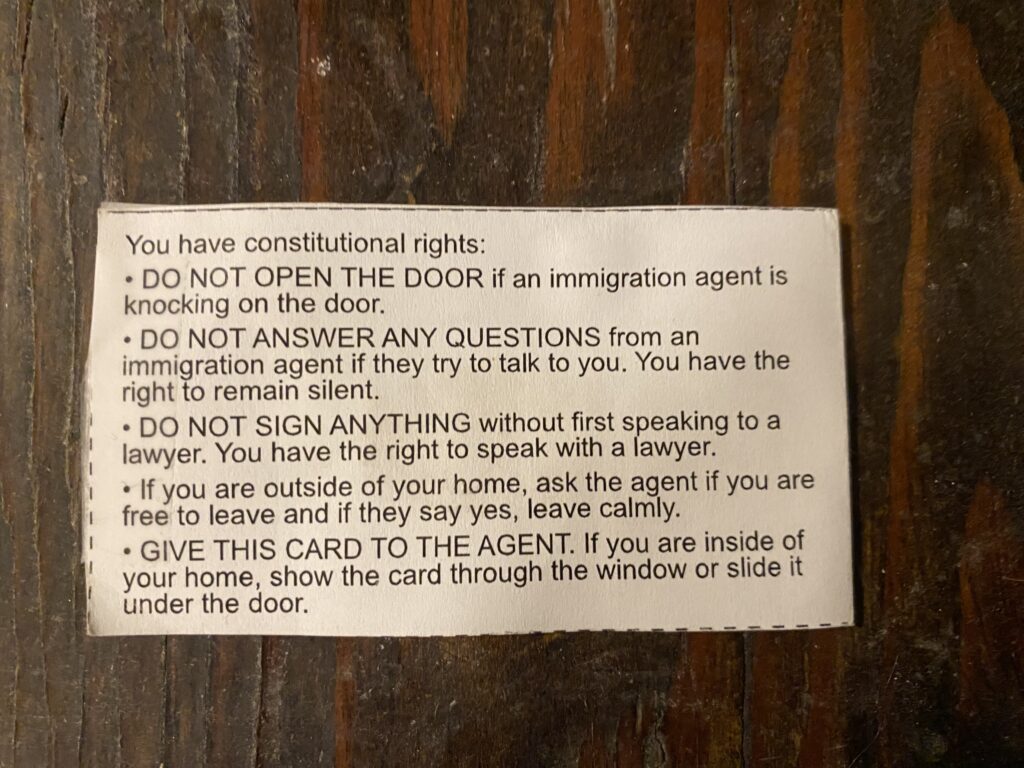
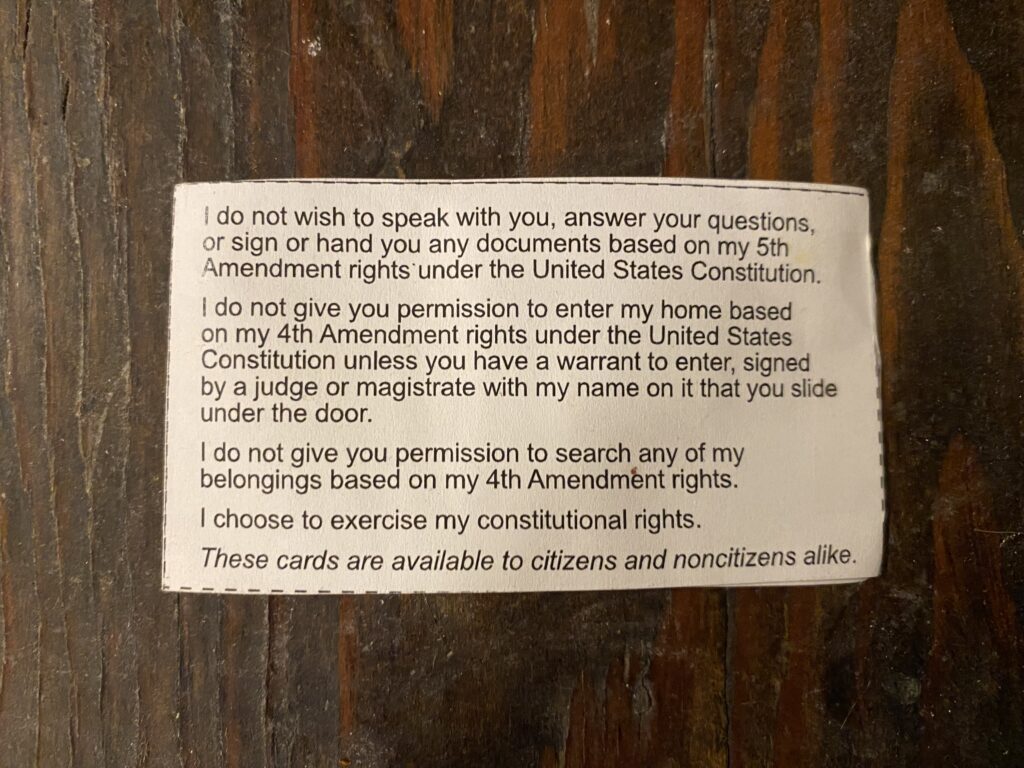
In response to new immigration policies, students have voiced their concerns and seek clear communication regarding acknowledgement and possible solutions with Maryville College administrators. Since President Donald Trump’s inauguration in January, a series of executive orders have been signed that will, and have already, changed the lives of millions of US citizens and non-citizens alike.
“We have seen an increase in students reaching out with concerns,” said Kirsten Sheppard, director of global engagement at Maryville College. “Given recent policy changes and executive orders, it’s understandable that there is uncertainty and anxiety, especially for students from immigrant backgrounds.”
Student One, an undocumented student who wishes to remain anonymous for their safety, added, “It is scary to come to class because [you may be discriminated against or attacked]. It is scary to go out to the store, get in a car, or be around your friends.”
Concerns regarding detention or deportation, forced separation from loved ones and financial vulnerability are just a few of the anxieties that run rampant through the immigrant community at MC as the Trump administration implements its plan to “crack down” on undocumented citizens.
“My deepest hope is to live without the constant shadow of fear — fear of stepping outside, attending school, or going to work. I yearn for a time when I no longer have to worry that my parents might go to work and never return,” added another Scot, hereafter referred to as Student Two and also requesting anonymity out of fear of reprisal.
Privileges that many US citizens take for granted – like having the necessary documents to secure a job, or speak their native language without fear of harassment – all hang in a delicate balance for Latinx people in the current political climate of the country, many of MC’s Hispanic students point out.
“I think we are affected in so many ways [that are] similar yet so different–because not every immigrant lives the same life,” said Romina Reyes (’27), vice president of the Latinx Student Alliance. “The issues that I have are different from the issues my friends have. But I know for a fact we are all suffering from emotional distress … we stopped being friends for a moment and stopped being kids and we were like, ‘Look at what’s going on, this is bad.’”
As students juggle the realization of how these policy changes can affect their lives, MC’s administration discerns the developing presidential orders.
“The [school] administration is closely monitoring all of the executive orders, directives, and guidance coming from Washington,” said Ben Stubbs, MC’s vice president and dean of students. “We are paying close attention, having intentional conversations, and engaging with our professional networks to stay informed about appropriate responses.”
In late January, LSA leaders organized a meeting that invited MC administrators – along with two local immigration and family lawyers – to address questions and share pertinent information regarding the impact these policy changes can have on students moving forward. This meeting was one of the first in an attempt to keep the Latinx community on campus informed about their rights.
In the face of so much fear and confusion, this meeting offered students a sense of solidarity with one another, as well as comfort, according to Reyes, one of the organizers.
“I thought it was something I needed to do because [the Latinx community on campus] don’t know who or what to trust,” she said. “So I felt it was important for them to have a resource that is credible and reliable so that it would bring some kind of comfort into their hearts.”
While every case is different, the attorneys noted, the most important takeaway was this: Do not talk to any law enforcement or immigration officer without an attorney present. Latinx students who are stopped or questioned by law enforcement, the attorneys said, should simply politely decline to share any information.
Immigration and Customs Enforcement, better known as ICE, is a federal law enforcement agency that enforces immigration laws. The organization has been a focal point of campus discussion around this issue in recent weeks, and public attention to ICE enforcement methods has raised questions about violation of basic Constitutional rights and outright dehumanization of individuals who are targeted.
The possibility of a potential ICE raid on campus strikes intense fear into the hearts of undocumented students, they said. They feel as if their civil liberties are at a higher risk to be ignored or violated by government officials, and the stress from such a possible scenario is an ever-present unease that takes a toll on their mental and physical health.
“[The government] has done nothing but [instill] fear into the community,” Student One said. “Not only criminals – they are breaking families and going after everyone.”
“All I ask for is to be understood; I am not a criminal or trying to take someone’s job,” Student Two added. “I have worked hard here to achieve a brighter future on my own merit. And hope that one day I won’t have to live in fear.”
This fear is widespread, and the obstacles these students face are overwhelming. Getting an internship or a job without documentation is a challenge already, with or without the added risks of driving to their place of work without a valid license, or the larger threat that looms above all else: deportation.
“It’s very scary. I feel like I can’t move forward with my life in peace without the looming anxiety that something is going to happen to me or someone I care about,” said Student Three, who also requested anonymity because of their immigration status. “It’s also very discouraging when thinking about internships, networking or job opportunities, since I’m actively being hunted by the government.”
These sentiments — a mix of fear, anxiety, anger and confusion — are not going unnoticed from an administrative standpoint.
“I do want to acknowledge the toll that recent political issues are having on students,” Stubbs said. “We understand that it is not conducive to an enjoyable and successful college experience. We want to support those students in navigating new obstacles and challenges.”
This sentiment is echoed by Sheppard, who emphasized Maryville College’s stance, saying, “We remain committed to fostering a safe and supportive learning environment for all students, regardless of their immigration status.”
The situation also hasn’t gone unnoticed by native students who feel led to support their classmates, and many of them find themselves asking how Maryville College administrators, and themselves, can better serve a campus community that is currently living in fear. The answers, according to Reyes, are all tied back to a simple trait: empathy.
When asked about a unifying message students and faculty alike can take away from this situation, Reyes stated, “Do not let your privilege [cloud] your empathy.”
At the same time, Reyes acknowledged that some Scots may be concerned about potential risks to themselves if they support their undocumented peers, yet still want to know what they can do to help. The answer, she added, lies in other simple traits: kindness and decency.
“I’m not going to ask you to be supportive of me, but at least don’t do anything to hurt me,” she said.
Some of Reyes’ undocumented peers believe that along with providing empathy, documented students can use their standing as a form of advocacy and support for their peers.
“Use your privilege of being a citizen to advocate for those whose voice can’t be heard or those who have to hide,” Student One said.
While peer support of undocumented students is not an obligation, Reyes views the role of faculty and staff differently.
“When it comes to faculty, they’re taking on a job and a responsibility, which is caring for their students and helping them [get] where they want to be in life,” she said. Her peers agree and hope that the College can find ways to provide preemptive support for undocumented students moving forward.
Student Three added, “Maryville College could help by making sure that ICE has no way to force interactions with students [on] campus.”
Because Maryville College is a private institution, such a guarantee might seem understood on the surface — but private institutions are not exempt from the rule of law, administrators say. Even on private property, a warrant (if it contains a correct student name, address, and signature from a judge), holds weight. Procedures are being established that ensure that the actions of college personnel don’t exceed what a warrant demands, but compliance with official documents cannot be denied.
“Residence life has been instructed to communicate up – to Safety and Security and administration,” Stubbs explained. “It’s our hope to respond accordingly based on whatever documentation and warrant [are provided], and certainly not exceed what may be appropriate.”
He added that students are protected by FERPA, the Family Educational Rights and Privacy Act that requires the college to keep student information and educational records private. Additionally, private spaces on campus such as residence halls and occupied classrooms would require a warrant for law enforcement to enter.
All of this, at the moment, is strictly hypothetical. Marian O’Briant, public information officer for the Blount County Sheriff’s Office, said that there has been no increased presence of immigration officials in Blount County in recent weeks, and that the department has seen little change since President Trump’s executive orders were signed.
However, she noted that if ICE agents did come to Blount to carry out enforcement action, the BCSO would “always cooperate with officials.”
College administrators echoed this sentiment, emphasizing their support within reasonable limits, ensuring demands from officials do not jeopardize the health, safety, and mental well-being of all Scots.
“Moving forward, we must continue to provide timely and accurate information to students, faculty, and staff,” Sheppard said. “Communication is key — whether through workshops, campus-wide updates, or direct outreach to students who may be affected. We also recognize the importance of collaborating with legal experts and advocacy organizations to ensure we are providing the best possible guidance.”
Students agree, adding that MC can help by pointing undocumented students to helpful resources, according to Student Three.
For some — like Reyes — the support provided by the Maryville College administration doesn’t feel substantial enough, or delivered in a way that best meets the needs of those students. One example: Information provided by the College, she said, should be translated into Spanish to better serve immigrant students. Another suggestion she has is for administrators to be more proactive in contacting those particular students and reassuring them.
“The people who did reach out, they did not until I reached out first,” she said. “I just think MC can try to work at finding resources that actually do benefit us. I think they are trying to be supportive without crossing a line that puts them in a predicament where their reputation [could be] damaged.”
At a time when confidentiality is so important to students, one source of support on campus is the MC Counseling Center. College counselors and chaplains are considered privileged resources, meaning the information shared with them is protected by federal law. But all Scots, MC’s undocumented students point out, can act as allies within the scope of the law by simply making themselves available.
“The best thing you can do is make sure you check on someone you know is going through this, make sure they know you are there and protect their confidentiality about this delicate topic,” Student One said. “You do not know what people can do with this type of information.”
For some students at MC, these current events serve as a reminder of the continuous battle for liberation amongst marginalized communities, noting that certain freedoms and liberties are not always assured.
“My mother once remarked that we are like birds in a cage of gold,” Student Two added. “We might live in luxury, but our freedom and very lives are far from guaranteed.”
This is a trying time for immigrant communities in this country, MC’s Latinx students point out, and while different backgrounds and experiences weigh on students, solidarity on campus at MC – among Scots and administrators — is a step in the right direction.