Insurance, Mangione, and Public Opinion
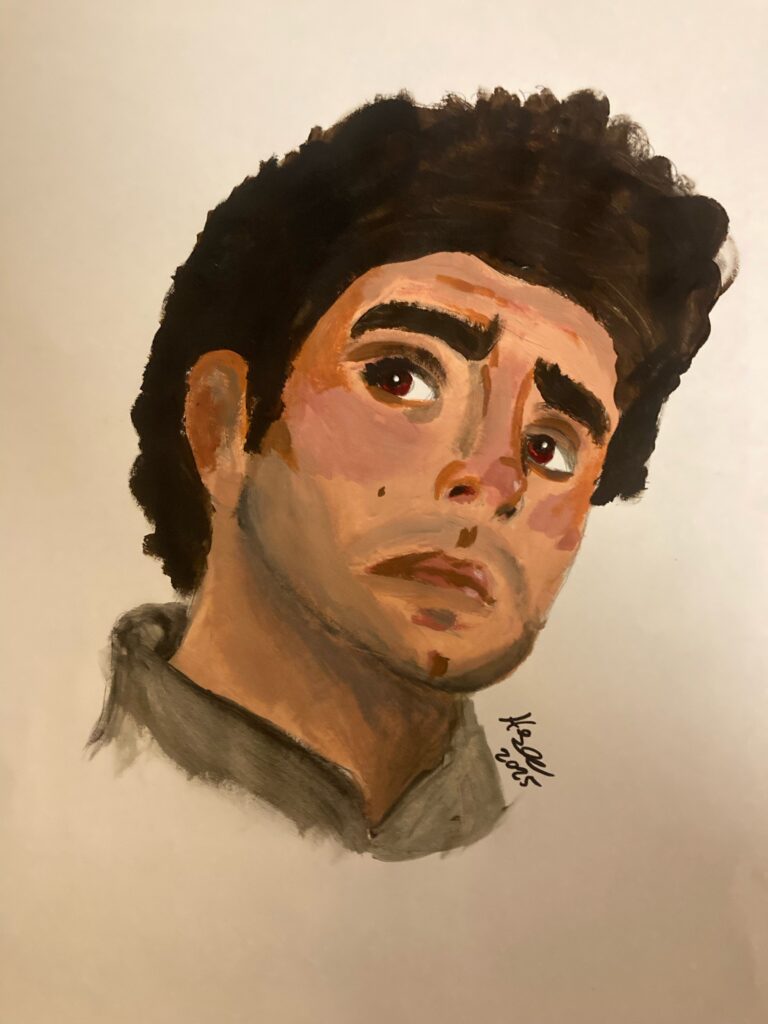
As the nation waits for an official indictment, Maryville College students weigh in on whether or not Luigi Mangione serves as a modern-day Robin Hood or a calculated killer.
While Mangione awaits trial for the stalking and murder of UnitedHealthcare CEO Brian Thompson, many at MC have begun to question what has caused this outcome to occur.
A source that wishes to remain anonymous due to personal information being shared, Student One, believes that while the act of violence itself is condemnable, the predatory practices insurance companies often use have led many to understand why these instances may occur.
“Murder, of course, is never the right thing to do. But I could logically see someone like him going through so much that it pushes them to the edge,” said Student One. “As a disabled person myself, it is exhausting fighting with insurance every month to get the medicine I need. I mean, they want to deny a medicine that I’ve been on since I was eight, a medicine I will 100% die without. I imagine adding severe mental illness symptoms to this could push someone.”
Hannah Lee (‘25) believes some of the wording used to describe the infamous Mangione in mass media needs to be reevaluated to consider the social implications of his alleged crime. Believing that the term ‘killer’ comes with a negative connotation that paints someone as actively taking the life of another without just cause, Lee believes the situation is much more nuanced.
“News outlets like Fox News who are in billionaires’ back pockets are trying to frame Manigone as a mindless killer instead of looking at the broader socio-economic issues that lead to this happening in the first place,” Lee said.
“His story needs to be discussed as what happens when a person is confined to a system that has failed him and millions like him time and time again without recourse or proper addressing,” Lee stated. “Let this be a lesson for billionaires and CEOs who want to capitalize on what should be a fundamental right for everyone in the world: healthcare.”
Lee shares the sentiment of understanding why one would want to combat insurance companies, with numerous students seeing Mangione as, “a sort of folk hero,” Lee said. “Many of them either don’t have healthcare or are relying on their family’s healthcare. Everyone, including myself, are waiting with bated breath to see if anything else is going to come out of this.”
Having access to proper insurance plans is an issue that plagues the nation, affecting numerous students’ ability to perform at MC as their mobility, function and quality of life is affected daily. Student One is insulin-dependent, making access to proper healthcare a necessity in order to survive.
“My whole life, I’ve had to risk my health due to insurance companies,” said Student One. “There have been times I’ve had to reuse old needles and syringes. Dull needles don’t feel good, and reusing them is not safe. I have times where I have to skip meals in order to ration my insulin to make it until my insurance will send me more.”
“I can clearly fathom how this could just become too much for someone, especially someone who might not be as used to it as I am,” Student One stated. “There have been days I fall on the floor and scream in frustration. Your life is treated like it doesn’t matter to these companies.”
Charlie Anderson (‘26) expresses the same frustration with the exploitative practices insurance companies perpetuate. “Health insurance CEOs are modern-day perpetrators of mass death, family separation, and destruction of the American dream that everyone wants to cling onto so badly,” Anderson said. “Nobody wants to acknowledge that the call is coming from inside of the house; it was only a matter of time before someone got sick of the status quo and did something about it.”
Anderson also finds distaste in the way the public often sexualizes Luigi, as she feels it takes away from the overall discussion regarding oppression and health insurance and “removes all nuance and significance from the event by reducing him to a sex icon.”
Anderson implores that the hypocritical way in which society views justice often has underlying double standards that reflect on values related to class. “Everyone buys into hypocritical ‘eye for an eye’ ideologies all of the time…but the second it happens to a well-dressed and well-spoken shareholder, everyone freaks out,” Anderson said.
“Everyone celebrates when death-leaders such as Bin Laden are assassinated, even more so if bystanders are taken out in the process, so why is this one so contentious? Luigi Mangione has chosen to go against a system that perpetuates hurt against countless people each year through the only language that insurance CEOs can understand: denying another American of their life and dignity.”
I finished all credits for my bachelor’s degree, from one of the top engineering schools in the USA, the month Luigi Mangione was born. Long before he was born I hadn’t realized yet I was a child victim of lifetime Special Funds No-Fault insurance. I’m in total agreement with all students in this article. It’s nice to know this generation’s outlook.
The Universe works in mysterious ways and I can only sense that Luigi Mangione is surrounded by angels of love and light!
I am horrified. Apparently, many in the MC community have forgotten that the Rev. Anderson, who exhorted them to “Do good on the largest scale possible,” would also have taught that all men are created in the imago dei. This is all men, not just those we like.
I strongly suspect the bulk of the students interviewed for this piece oppose the death penalty, likely citing reasons of race, class and privilege. Yet, when the victim is of the right class and occupation, with all the privileges our society can provide, they tacitly approve not only the death penalty, but a vigilante administered death penalty. Letting popular opinions and prevailing prejudices guide the mob or the individual in deciding who should live and who should die, which groups are a threat to society and which are not, has harvested much strange fruit.
Debate the economics of health care. Consider the ethics of various delivery systems. These are right and proper discussions. However, whether or not vigilante justice is justice should not be a matter for discussion within a nation of laws.
Dr. M. Fraelich (’87)