Departing faculty members on Maryville College’s retention challenges
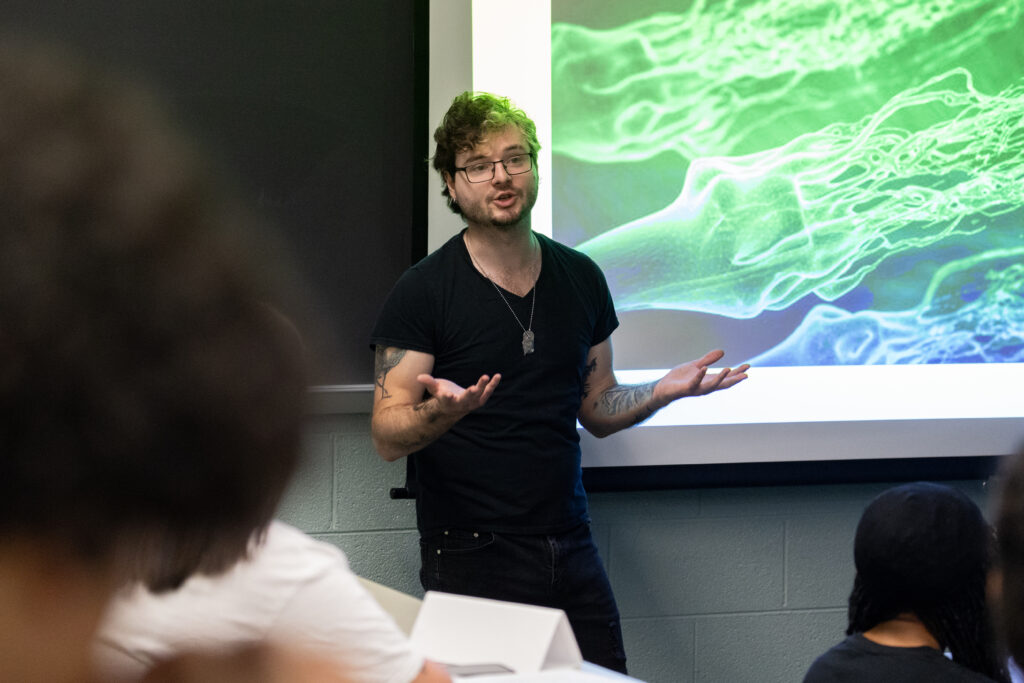
Throughout the academic year, press releases have announced the retirement of faculty members at MC, including long-time professors Jan Taylor, Kathie Shiba and Barbara Johnson. In addition, Rayanne Streeter left after the 2025 fall semester, and MC will lose professors Jeff Kelly, Aaron Astor and Samantha Astor at the end of the spring semester. These individuals are not retiring, but are finding opportunities elsewhere.
While some faculty can call MC home, making it their career and staying at the College for decades, a trend of faculty turnover is noticeable, and begs the question of why some professors choose to leave.
Dr. Aaron Astor, professor of history, attributes the high turnover among newly hired professors to the rise in the cost of living. He started at MC in 2007, and was able to secure affordable housing before the city of Maryville was “discovered,” he said, adding that housing prices have practically doubled since 2007.
“If you moved here before 2018 and locked down a house and a low interest rate, it is feasible. If you moved here recently, it’s harder,” he said. “MC never paid a lot of money but the cost of living was low enough that it was manageable.”
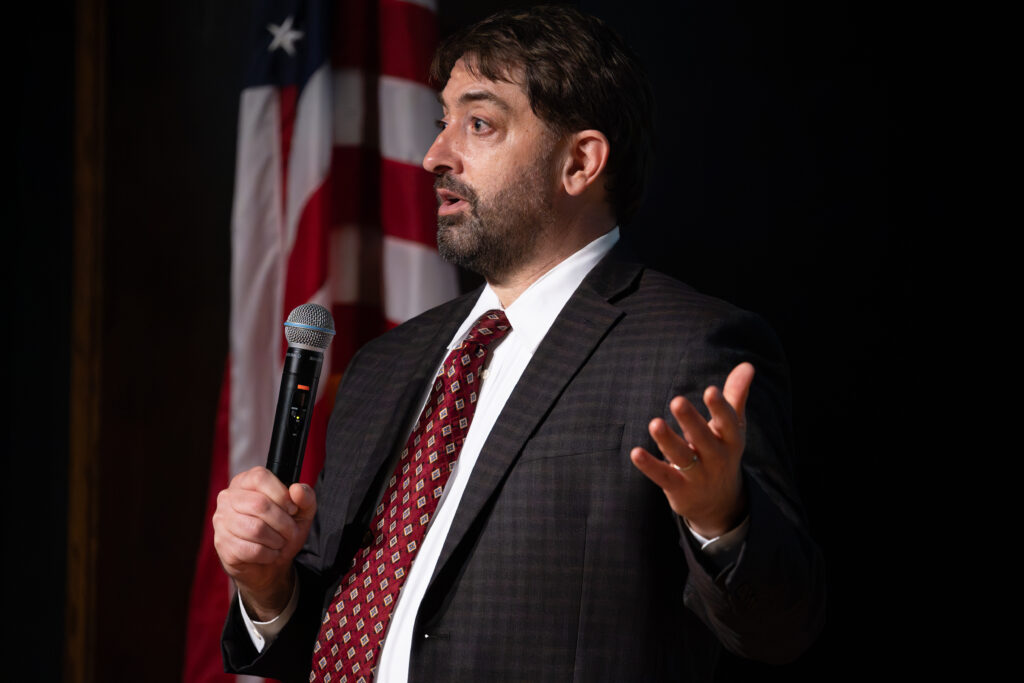
Photo courtesy of Wes Hope
Maryville College has an aging faculty, and as long-term faculty choose to retire, the loss of their contributions and wealth of institutional knowledge that they carry with them may leave students wondering who will fill these gaps.
“Our retiring faculty leave a legacy,” said Vice President and Dean of the College Dr. Liz Perry-Sizemore. “Searching for new faculty and staff is very time and labor-intensive, and the transition period between one individual’s departure and another’s arrival can sometimes be challenging as well,” she added.
As Astor pointed out – cost of living has increased, and salaries that were manageable 20 years ago are nearly impossible to live on now.
An anonymous faculty member said, “The president hired a consulting company called CBIZ to tell us what we already knew – that salaries are low, haven’t kept up with inflation, and a substantial amount of us are paid below the 25th percentile of what is standard for our job rank at similar institutions.”
This faculty member also shared that a poll conducted earlier this year found that approximately 18% of faculty were actively searching for other jobs and 30% said they were seriously considering it. “Many cited financial issues as a leading reason for this.”
These statistics reinforce that faculty members are leaving the College due to low pay and the inability of their salaries to support the cost of living. The pay disparity between faculty and administration is noticeable.
According to a ProPublica breakdown of the College’s revenue and expenses, Maryville College President Dr. Bryan Coker made over $375,000 in 2024, with an additional $61,151 in employee benefits.
When asked about this figure, an anonymous faculty member said that the benefits are “more than my annual salary.”
Astor said that a comparison of professor salaries to that of the president “doesn’t tell us much… as the market for a college president is simply different than that for a college professor. That is true everywhere, not just at MC.”
In December 2025, the College announced a change in the frequency of pay from monthly to bi-weekly, going into effect at the beginning of March. This change has left some professors struggling to recover financially.
Dr. Jeff Kelly, who uses they/them pronouns, explained that the amount received in their account immediately after the change in pay period was substantially lower than was expected.
“Me and a couple other people [had] to figure out if we needed to get loans just to make housing payments. A lot of us don’t have savings, I’m not able to put any into saving from the income that I make.”
For Kelly, the situation is less than ideal. They have had conversations with other faculty about the possibility of needing to pick up second jobs to make ends meet.
“I have a roommate,” they said. “As a 30 year old with this position, I’d hoped to not need that, [but] that’s the reality of things.”
Although the financial stress has not been felt by Associate Professor of Computer Science Dr. Barbara Johnson, who is retiring at the end of the 2025-26 academic year, she expressed sympathy for those experiencing these challenges.
“In 2001, when I started, I was married. If I’d been just starting out, single, I would have had a really hard time,” she said.
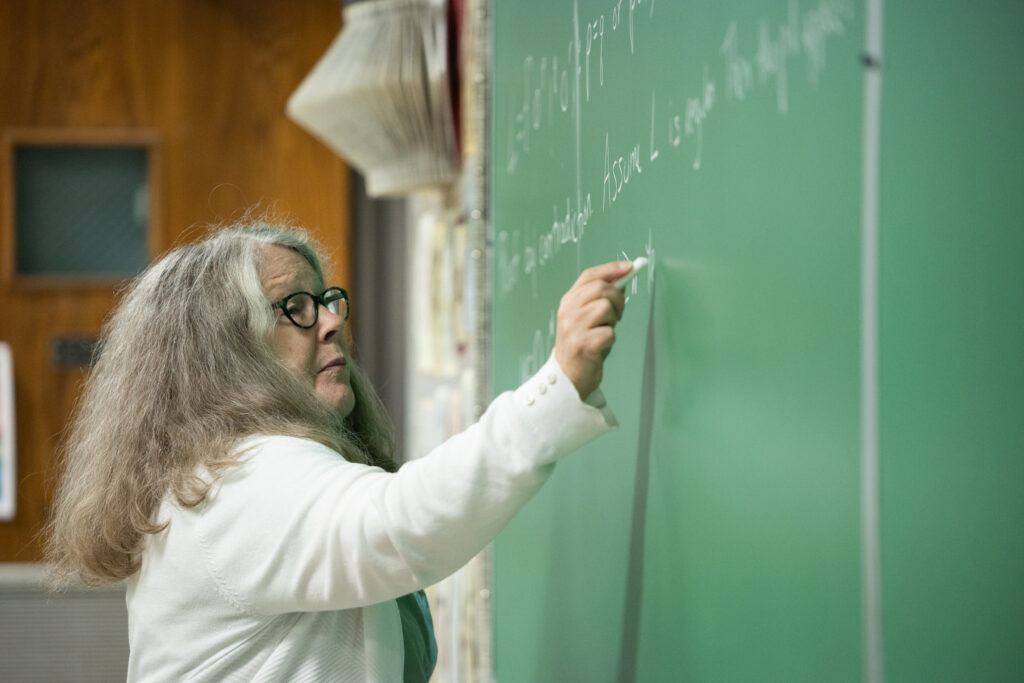
Photo courtesy of Wes Hope
Both Astor and Johnson noted a trend in faculty retention – that newly hired professors are the ones leaving. Johnson expressed concern about faculty retention in recent years.
Keeping valuable educators at the College is necessary to maintain the high educational standards and student experience, and the small size of MC contributes to a feeling of uncertainty surrounding faculty retention.
When entire divisions are supported by two or three faculty members, the loss of one could be detrimental. Astor explained that many professors teach core courses required by all students, and that it is important to find somebody permanent when filling positions.
The recent and current searches for new faculty at MC have been extensive.
According to Perry-Sizemore, “We just completed a search in computer science and another in physical education and health with K-12 teacher licensure.
Additionally, the College is finalizing searches in: hospitality and tourism, economics, natural sciences and two positions in language and literature.
“We’re very early into searches for history and education,” she added.
While Perry-Sizemore said that recruiting efforts are largely successful, and MC can hire positions, the question remains of whether or not they will stay when the realities of living expenses hit.
“I see great effort within and outside of Academic Affairs to focus on improving search processes, supporting professional development in the workplace and improving employee recognition,” Perry-Sizemore said.
The College has hired a professor for the computer science department, and Johnson said she was very impressed with him when he came to interview on campus.
“I think he’s going to be a perfect fit in many ways,” she said. “But to be honest with you, I am a little concerned that he may look for opportunities where he can make more money.”
“In certain disciplines like computer science, if you go to a university you are going to be paid a lot more,” she explained. “When I did have to leave [for medical reasons], they brought someone in from UT, the reason they were able to bring me back was because he left for a higher paying job.”
Johnson explained that different divisions require different pay rates to stay competitive, and computer science is one of the higher paying divisions at MC. Salaries were reassessed a few years ago, and Johnson said she got a huge raise compared to other faculty, who were a bit disgruntled.
However, she said, “We have to be realistic. To offer those programs, you have to compensate differently. This is the first year, since we got the raise last year, that I’ve been making a salary that makes sense for me.
The rate of pay for faculty offers one reason that a professor may leave Maryville College. Astor said that faculty might also leave if they aren’t as committed to the region, as MC is nestled in the Smoky Mountains, and has been leaning into the unique regional identity in recent years.
“Not everyone is into that. You are better served as a faculty member if you are invested in what makes this region distinctive,” he said, citing the natural landscape and culture as key aspects.
Photo courtesy of Wes Hope
Additionally, the small campus can create challenges surrounding school culture, interpersonal dynamics, morale and even discrimination.
Kelly explained that, as a transgender and nonbinary professor, they felt treated differently. They don’t know if this was due to their gender or sexuality, but it was “definitely felt.”
“That’s something often unspoken and it’s hard to address because I don’t have proof that that is what’s happening, but when you and other people who fall into social categories are being treated differently, [it is noticable],” Kelly said.
“As a queer person, part of me just needs to get out of Tennessee, it doesn’t feel safe. Going to a sanctuary state sounds phenomenal right now,” they added.
Kelly has accepted a position at Salem State University in Massachusetts.
“[I have] very mixed emotions,” they said. “I’m excited for new opportunities and being back in a coastal state, and the program is really cool. But I’m going to miss my students and the department.”
While Johnson, Astor and Kelly are leaving for different reasons, they unanimously said that the students have been a highlight of their time here at MC.
“[The students] have made my time here the most worthwhile, they are the reason I come here every morning,” Kelly said, adding a celebratory “go Scots!”
“I will miss it, for sure,” Johnson said. “I feel like I have a lot more to share. After you’ve been in this business for so long, you’ve accrued so much knowledge about a wide variety of things. It’s a little bit of a loss in my opinion to not be able to share that anymore.”
Astor is leaving MC to follow a dream opportunity. As a specialist in Civil War studies, he is ecstatic to be taking on a new role at Gettysburg College in Pennsylvania.
“I would never [leave] just to go somewhere else, he said. “This is different because it’s Gettysburg. It’s the center of the universe there, it’s amazing,” he said, clearly excited. “Me leaving is no reflection of my time at MC.”
Astor added that he was not actively searching for a job when he discovered this dream position, but it was too good to pass up and it was the right time for his career and his family.
“I’d say my time at Maryville College has been positive,” Kelly said. “While I’m disappointed that it didn’t end up panning out the way I hoped, it’s been a good opportunity and I’m grateful for all the connections I’ve made along the way.”
“Our faculty are collaborative lifelong learners and very supportive of each other’s professional development,” said Perry-Sizemore. “They are always teaching one another… and there’s a lot of knowledge they share generously among themselves. I’m impressed by the ways they apply their transferable skills during these transitions.”
You should also look into the staff turnover….