MC’s integration of AI on campus
By Watiyeli Taylor \ Oct. 20, 2026
As artificial intelligence has continued to develop, it has become more prevalent on campus. From assignments to advertisements, it is impossible to ignore the way AI has become increasingly ingrained in our daily lives.
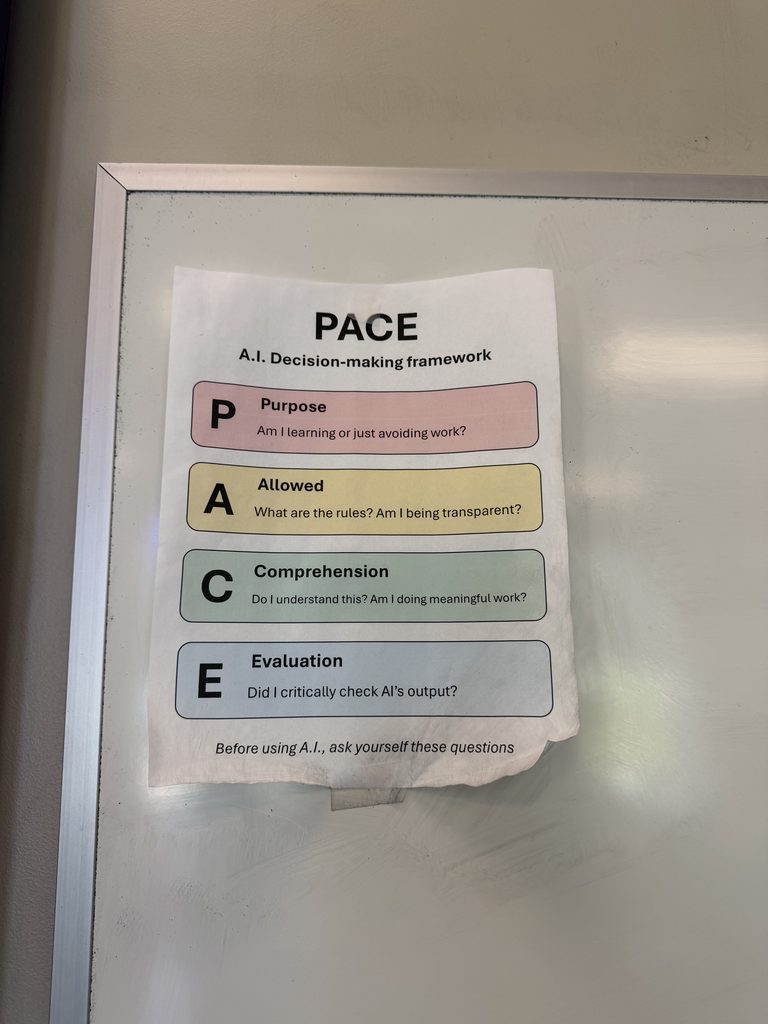
Jan Taylor, former lecturer and administrator at Maryville College, was a leader in developing MC’s AI policy, served on the college’s AI committee, and later developed the PACE framework for using AI in learning.
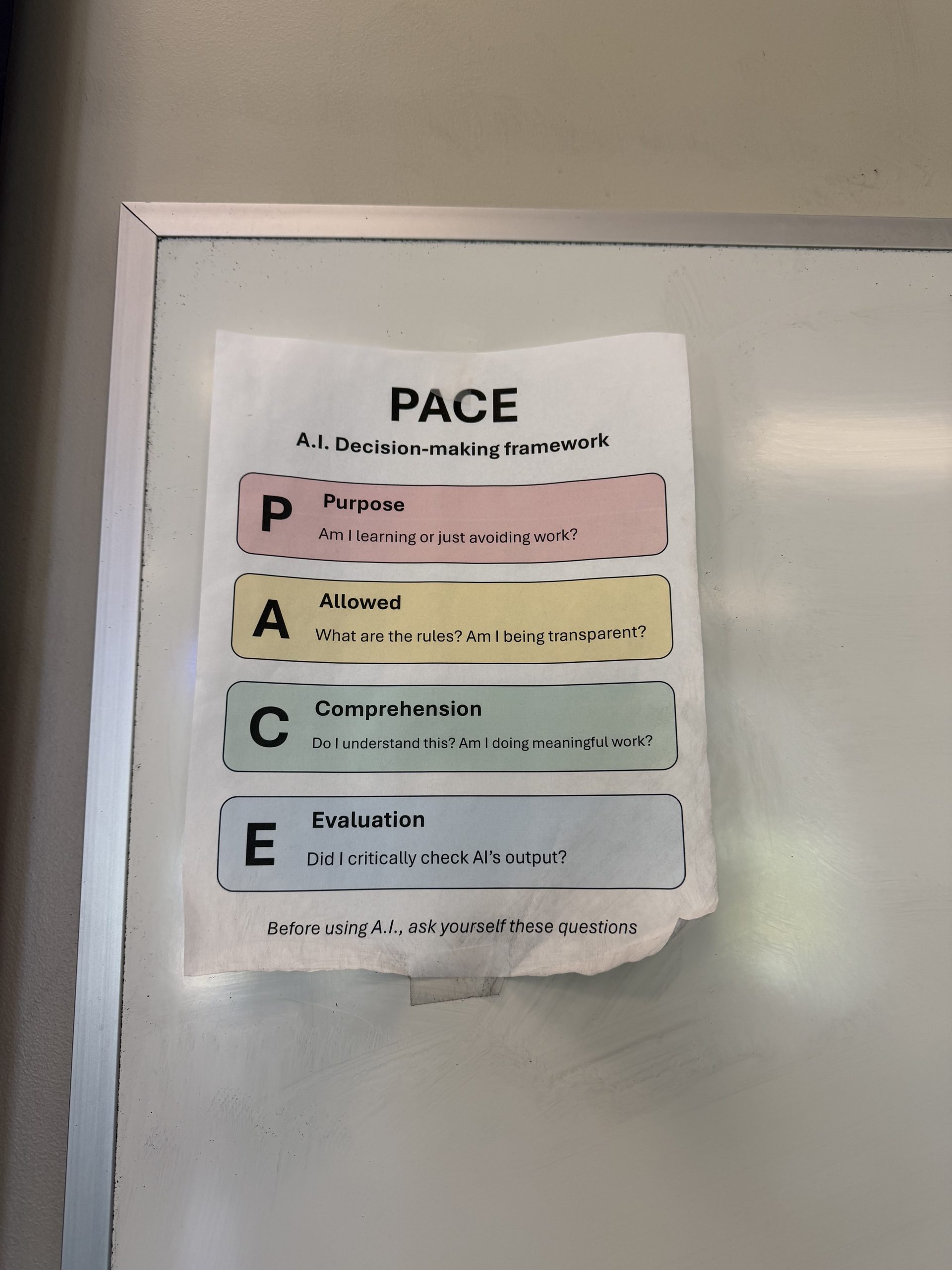
When asked about her opinion of AI, Taylor said, “I believe that decision-making about AI in education should be context-specific. AI can interfere with learning, but it can also be useful for exploring a question, getting feedback, or practicing a skill. It can produce false information but also can provide a helpful summary or analysis. Learning objectives and user profile are significant in deciding when AI use is problematic and when it is appropriate. The question isn’t simply whether a student used AI: it’s what the assignment was meant to teach, whether their use was allowed, and whether the student can understand and evaluate the result.”
Many professors on campus believe that AI isn’t simply good or bad, but that students need to be taught how to use AI in a more productive way.
Scott Steele (‘90), associate professor of English said, “I think students need to understand the technology while also protecting the human skills that matter in learning: critical thinking, creativity, judgment, and their own voices.”
The main concern for professors is to keep the students’ human voices and critical thinking skills intact.
Maryleith Turner, lecturer in English, said, “I think MC’s Be the Human motto is an excellent approach to AI integration. It allows instructors and students to explore how AI might fit into the wide variety of classes and professional fields that are represented at Maryville while emphasizing that the most effective methods will always center human voice, experience, and expertise.”
Kendall Boggs (‘27), a management major, agrees with the thinking of these professors. She has found AI to be a helpful tool to make learning easier, but does not want it to do all the work for her.
Boggs said, “When it first came out, I was so scared to use it because everyone was just sort of using it to cheat. And so I thought that that was the only way it could be used. As it’s evolved, there are so many more ways to use it now than just feeding it a question and telling you the answer. I use it a lot when I do my assignments because it helps me brainstorm and it organizes my thoughts.”
However, there are students on campus who believe that AI should not be used at all. Catie Zani (‘28), an environmental science major, said, “I don’t agree with AI. I don’t like AI. I think it’s bad for our society, culture, and environment. The giant data centers that AI runs on use up a lot of water; they take up a lot of land, electricity, and our natural resources. I feel like it is promoting laziness and unintelligence [in our culture]… I don’t think we should integrate any AI on campus, but I also understand that our economy and workforce now use AI.”
Taylor acknowledges that these concerns are significant and deserve attention. She provided a solution for this cognitive dissonance between students and professors.
“I believe that faculty and students should listen to each other,” Taylor said. “Ideally, campus conversations will include both teachers and learners and a range of users from enthusiasts to resisters. Student reluctance can be thoughtful, and it should inform how we teach.”
Outside the classroom, AI has infiltrated social media and advertising. Specifically, sports advertising has been the most impacted by AI. Many advertisements depict freshman and transfer students in MC uniforms before they have had a media day or use graphics made entirely with AI.
On Sept. 22, Eric Vornhagen (‘29), who helps run the Instagram page for the Maryville College student section (maryvillemaniacs), posted an advertisement for the home volleyball game. Later that day, posters were being handed out, made from his graphic that had been run through AI.
Vornhagen said, “[It was] like an off-brand AI version of the one I made.”
The coaches who were handing out the posters learned from this situation and have since asked Vorhagen for printable copies whenever he creates an advertisement.
When asked about the advertisement issue, Boggs said, “I think that we have a great marketing team here that would be very good at Canva. And we can be paying people to do that instead of feeding it into an AI source.”
A main motivation for integrating AI seems to be the likelihood of encountering it in the workforce after college. Dr. Niklas Trzaskowski, director of the Career Center, one of the main organizers of the AI summit and a member of the AI working group, said, “I am very interested in how organizations may use AI to… help people become more effective at their jobs. Additionally, I am very interested in how AI has affected the economy, particularly the job market — I want to know what we can do to help our graduates prepare for the world they are about to enter.”
Trzaskowski agrees with arguments from both sides and thinks MC’s approach to AI has been thoughtfully restrained yet not shying away from the technology.
“We should continue working to improve the technology while also ensuring that we find ways to effectively prevent any potential downsides,” Trzaskowski said. “Maryville College needs to continue finding thoughtful and effective ways to engage with this topic, as this technological development will tremendously affect the lives of the students we are here to serve.”
As a new and ever-evolving technology, it has taken time for Marville College to adjust, but we seem to be taking on the challenge.