Dean of Students Dr. Ben Stubbs encourages students to engage in conversations exploring fraternity & sorority life
By Dr. Ben Stubbs | Sept. 15, 2026
Guest column
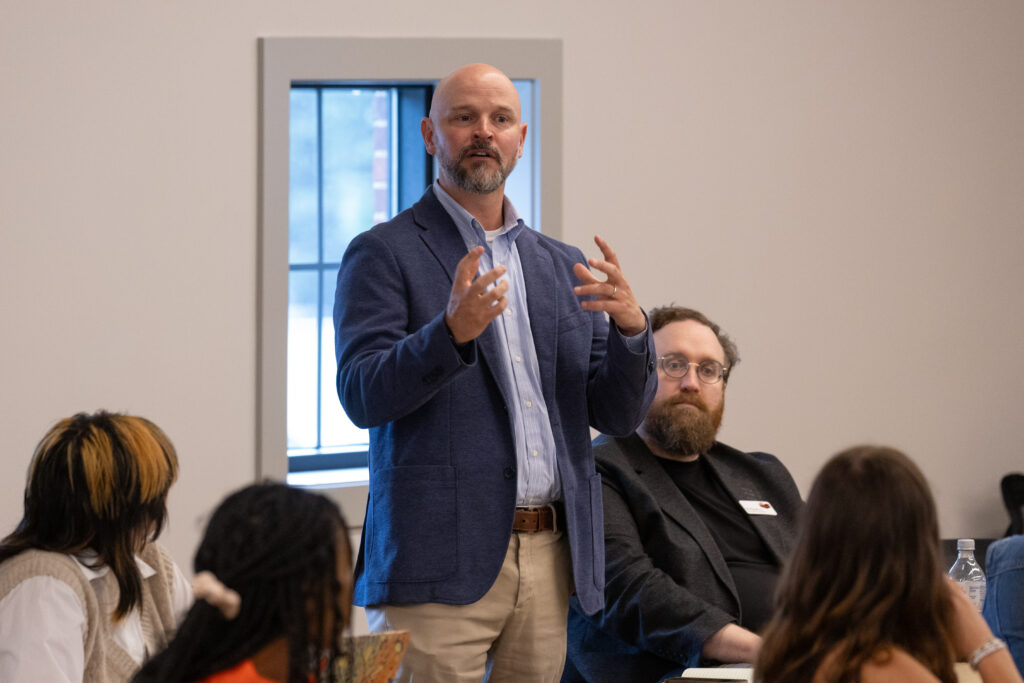
During a recent Town Hall on Fraternity & Sorority Life, a student asked me to share my personal opinions on the issue under discussion. I had spent the previous 40 minutes or so attempting to articulate the reasons why we are exploring the recognition of fraternities and sororities, reporting on the findings of the spring listening sessions and surveys, and describing what Greek Life might look like at Maryville College, if done in alignment with our values and culture. We had just entered the “comment and question” phase of the meeting, and this request took me by surprise. I was wary of intruding on time that was, in my mind, set aside to give students and others the chance to ask questions and be heard. The Town Hall presented a chance for the Campus Life Exploratory Committee members, including me, to hear from the community. I ended up not providing my personal views on the matter in that space, and instead elected to let student voices utilize that time. Perhaps that was a missed opportunity. In requesting that I speak my mind, the student stated, “I think we deserve to know where the Dean of Students stands.”
I agree. However, if you are looking for a simple “for” or “against” Greek Life here, you may be disappointed. First, we are not yet done collecting input and reviewing the available information. Survey data, town hall comments, emails, and other information all make a difference and continue to shape my thinking on the subject. Second, the Campus Life Exploratory Committee has spent most of a year discussing this topic and others, and we will move toward a recommendation together, as a committee. Talk of my personal views and goals tends to undermine the earnest and committed engagement in this conversation by the other committee members. I may be the public face of this conversation so far, but this is undoubtedly a group project.
With that said, I am happy to shed some light on my relationship to fraternity and sorority life, for those who are interested. I shared a similar message with the SGA recently, and I appreciate the Highland Echo editors allowing me the space to share the same message with you.
I am not a fraternity member. During the spring semester of my freshman year of college, I participated in a fraternity’s new member process. However, I quit the process prior to being initiated when it became clear that the fraternity chapter’s values did not align with my own. Many of my college friends — and my wife — were in various fraternities or sororities, though certainly not all of them.
At two different institutions from 2012-2024, I was directly involved in and instrumental to the operations of Fraternity & Sorority Life. I was sometimes the only staff member supporting these Greek communities, and I worked very closely with chapters, officers, members, advisors and headquarters representatives.
I witnessed the benefits of these Greek communities first-hand. Nervous and uncertain new students found community. Officers developed leadership skills while creating change. Fraternities and sororities strengthened other campus programs, such as Homecoming, community service events, intramural sports, athletics events, and Take Back the Night, a global event aimed at preventing relationship violence and sexual assault. Students who joined Greek organizations mostly for the social experience became earnest, passionate advocates for Ronald McDonald House, or Alzheimer’s research, or the Children’s Miracle Network, or wounded veterans programs. Students founded organizations aligned with their identity and culture, including a Co-Ed Latino-interest organization. Students traveling in long van rides to and from Indianapolis (the site of the Association for Fraternal Values and Leadership annual conference), shared their stories and backgrounds with each other, often leading to deeper understanding and connection.
These organizations, and their members, were a part of the campus community but certainly did not dominate it. Their members were involved across campus alongside non-members. Their tables were next to academic, faith-based, and identity-based clubs at the involvement fairs. The communities included a wide range of students in terms of race, ethnicity, first-generation status, and socioeconomic status. If I remember correctly, a majority of members did not originally plan to join a fraternity or sorority as they arrived for their first semester but chose to do so after meeting the members and seeing the chapters in action. In short, I witnessed directly the many, and sometimes surprising, benefits of these organizations, both for individuals and for the campus community.
However, I also witnessed the challenges. I investigated hazing allegations. I met with crying students who had an alienating recruitment experience. I saw members roll their eyes while I led workshops on consent and the Title IX process. Organizations were placed on probation for not following event risk management procedures, including allowing underage students to become dangerously intoxicated. We were very fortunate that, during my time with these communities, no catastrophic events occurred. But there were scary moments. And moments that undermined the values that these organizations espouse. Pranks escalated into fistfights or property damage. Culture-Based Fraternal Organizations, including National Pan-Hellenic Council organizations (the “Divine Nine”), often felt excluded by other Greek organizations. Once at a basketball Greek Night, the members of a fraternity thought that it would be funny to place bets on and cheer for the other team. Some organizations’ proposed party themes or features resulted in very direct, but usually constructive, conversations about dignity, inclusion and decency.
During my 12 years overseeing Fraternity & Sorority Life, I was sometimes accused of attempting to “kill Greek Life.” One chapter president told me, “Greek Life would be great if you would just leave us alone.” Usually, these sentiments arose when we implemented new initiatives or policies designed to address the challenges that I outlined above. Most of those initiatives worked and strengthened the community, but that rarely mattered to the critics. Those students, advisors, and alumni were convinced that I, as a non-Greek, was against the system overall and working toward eliminating fraternities and sororities from campus altogether. Those individuals would be confused to hear that the perception for some at Maryville College is that I am personally forcing Greek Life into existence.
I do not know exactly what Greek Life at Maryville College would look like. But any fraternity and sorority community brings both benefits and challenges, and I am intimately acquainted with both. As such, I do not engage in this conversation lightly. Neither do the members of the Campus Life Exploratory Committee. We all understand that recognizing fraternities and sororities would be a significant change for the College. And we all know that many students have deep-seated worries about what that change might mean for them.
However, we decided to explore the topic as a potential benefit to campus life, and we are doing so. We have provided many opportunities to provide input and be heard, and we sought to address the questions and concerns expressed during the spring semester. We have shared information about how these communities work at other institutions, and how they align with their institutions’ values and mission. We’ve discussed the ways that institutions address risks. We reported that, according to the survey data, most students and stakeholders are not supportive of recognizing fraternities and sororities, but also that there is a segment of the student body that is interested in this type of organization. Some have interpreted the ways that we presented this information and articulated the potential benefits to signal an unequivocal endorsement of Greek Life. While this was never the intention, the committee members and I welcome feedback regarding the process. The truth is that we are listening, and that most of us involved have nuanced views on the topic.
This process represents a unique opportunity for all students to be involved in a major College decision. Engaging in dialogue, utilizing evidence, considering different viewpoints, engaging in controversy with civility and dignity, and being open to challenging conversations are a few of the hallmarks of a liberal arts education and align with our mission to prepare students for lives of citizenship and leadership. Thank you to all who have engaged in the process so far, and please don’t hesitate to contact me or other members of the committee (as listed in previous emails) to share your thoughts or ask questions.
Go Scots!
When Ben Stubbs didn’t respond to the student’s question I went up to him after the meeting and asked if he would answer the question. What I find interesting in this article is how the answer is the same except for the fact that he said to me and one other student that he knew incidents were inevitable if Greek life is introduced. Which I find interesting for him to not mention here in a much more public setting.