Remembering John Franklin Magill
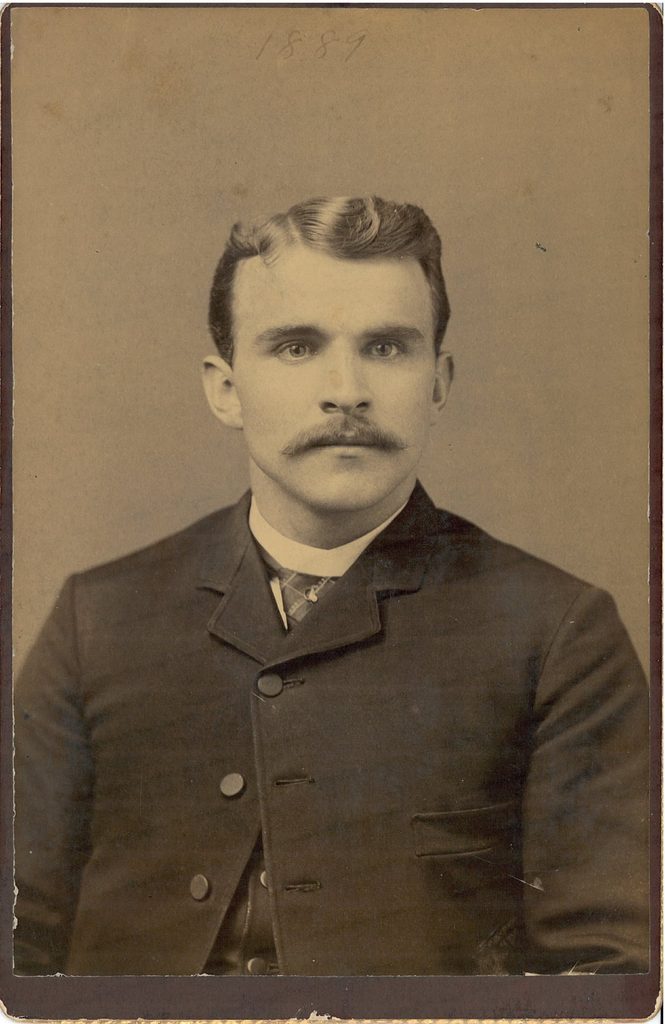
By Ansley Hoard | Oct. 20, 2026
Many students don’t know there is a graveyard on the Maryville College campus where people connected to the College are buried. While students walk across campus every day, the history held within the graveyard can easily go unnoticed. The cemetery is home to people who played a role in the College’s history, from its early years to the present day. Among those buried there are alumni and their family members, administrators and students. The graveyard is also the resting place of Isaac Anderson, the founder of Maryville College.
The cemetery holds the stories of people who lived through different periods of American history, including those who served in the military. Nine military members are buried there, some of whom served as chaplains. Their service spans the Civil War, World War I, World War II and conflicts in the 1960s like the Vietnam War. The graves include two Civil War soldiers, one who fought for the Confederacy and another who fought for the Union, as well as two World War I soldiers and four World War II soldiers.
Although these individuals represent different parts of the college’s history, some may be remembered less often than others. One of them is John Franklin Magill, a member of the Maryville College baseball team who died in 1889 after being struck in the head with a baseball during a game.
According to an 1889 account in The Maryville Times, “John Franklin Magill died at his parents’ residence on July 5, 1889.” After being struck, Magill was taken to his parents’ home, where he later died.
His death was remembered by the community, and his funeral was held in the chapel, which was in Anderson Hall at the time. An account published in The Maryville Times described the gathering and how the chapel had been prepared to honor him.
“The Large assembly gathered in the College Chapel…testified to the general esteem in which he was held. The Chapel was draped with the insignia of grief, and the casket was covered with floral offerings,” the newspaper reported.
The account offers a glimpse into the grief surrounding Magill’s death. The gathering in the chapel and the floral offering suggest that his death affected more than his immediate family. Members of the college community came together to remember him.
More than a century later, Magill’s story can easily be reduced to the circumstances of his death. His name is connected to a tragic accident on a baseball field, but the historical account of his life reveals more about the person the college community lost.
In its coverage of Magill’s death, The Maryville Times described him as “a humble, conscientious Christian.” The newspaper explained that he converted to Christianity under the ministry of the Rev. D. McDonald in 1881 and joined the Presbyterian church in Madisonville, where his membership remained. After his conversion, Magill decided to pursue the ministry and came to Maryville to study toward that goal.
The account continued to describe his time as a student: “Here he was an honest and earnest student and steadily developed in mental and moral power. His best year was his last one.” The newspaper also said that his Christian faith and zeal remained evident throughout his illness, concluding, “He is at rest.”
These details offer a different perspective on Magill’s life. He was not simply a student who died in an unfortunate accident. He was pursuing an education with the intention of entering the ministry, and his faith and studies were important enough to be included in the account of his death. The newspaper’s description gives readers a glimpse of the life he was building before it was cut short.
The Maryville College graveyard holds the names of people who helped shape the institution, along with the stories of individuals whose lives may not be as widely remembered. Magill’s story is one example of how historical records can help bring those lives back into focus.
For those who pass the graveyard on their way into the college woods, the names on the headstones and monuments may seem like remnants of a distant past. But behind each name is a person who lived, studied, worked or formed relationships within a community. In Magill’s case, an old newspaper account preserves not only the details of his death but also the aspirations and faith that shaped how he was remembered.