Growth and fundraising; planning for the future at Maryville College
Campus growth endeavors are ongoing, with the new Alexander Institute taking center stage. However, other developments on campus aside from the science center are being researched and investigated to bring even more change to Maryville College.
Maryville College President Dr. Bryan Coker revealed a new program being worked on that can have a widespread impact on the MC campus.
“As we all know, our historic campus has many needs, and we are always considering options for effectively addressing such needs. For example, we are currently investigating ‘energy savings performance contract programs,’ through which we could make energy efficiency improvements across campus,” Coker said.
These energy efficiency improvements would have many benefits for students, faculty and staff, and would improve conditions in both class buildings and dorms.
“The program would enable us to make improvements to the heating and air conditioning systems, and perhaps the windows in some buildings,” Coker said.
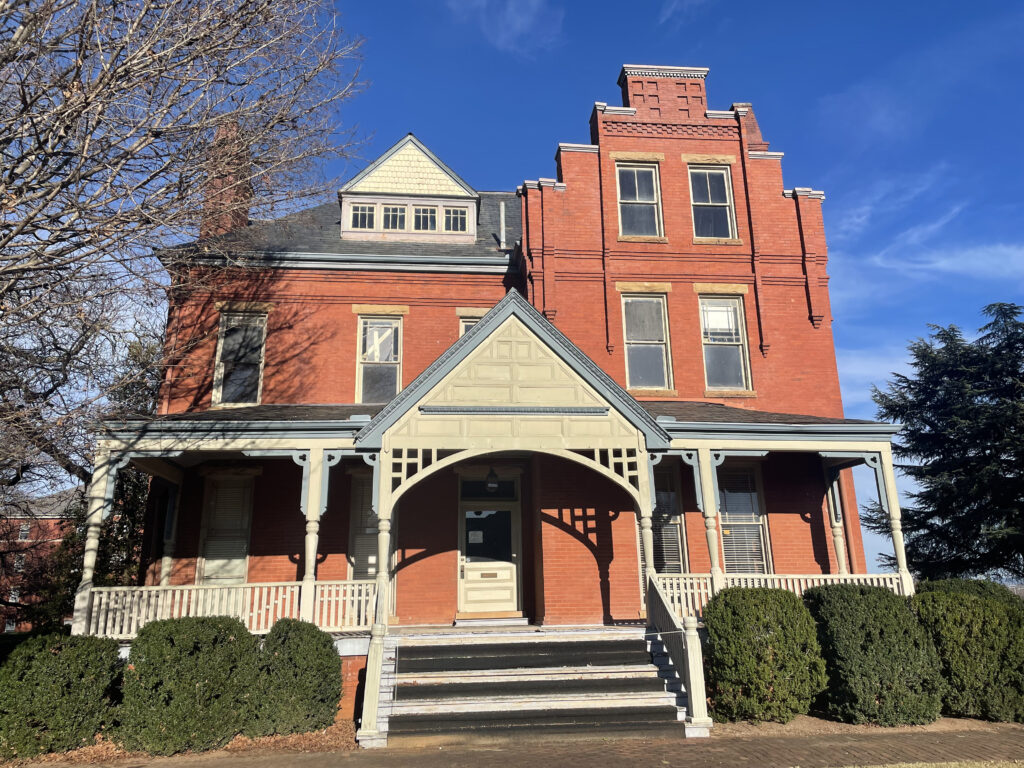
Energy efficiency is not the only thing that is being figured out. Behind the scenes developments relating to the Willard House, which is currently in disrepair, are ongoing. Coker explained that fundraising efforts to convert Willard House into a campus welcome center and new location for the Office of Admissions were partially successful. The College raised $2.25 million, but the projected building renovation costs were nearly double this amount.
“After deciding that such a costly project was not likely feasible nor fiscally responsible, the College has more recently requested more basic estimates for simply making the Willard House [structurally safe] and usable again,” Coker said, adding that it could be a potential event space or home for other campus offices. Coker is still awaiting these estimates.
Coker went on to emphasize that even though the Willard House is a difficult project to figure out, he and his team are dedicated to the effort.
“Currently, the $2.25 million remains in savings and is specifically designated for the Willard House. This is a challenging situation, given that we are working to balance historic preservation of a campus structure with fiscal responsibility,” Coker said.
It’s important to note that because those funds are specifically earmarked for the Willard House, they cannot be spent on renovations to other buildings, Coker added. While $2.25 million is a significant sum, it was given by donors who gave the money specifically for the Willard House project, which means those funds are “restricted.” In other words, despite the needs of other aging structures on the MC campus, that money can’t be used to meet them.
To the casual observer, such financial rules might seem complicated and difficult to understand, but Suzy Booker, vice president of institutional advancement, knows the ins and outs of fundraising for big projects. Booker explained that there are different areas of donations for different purposes.
“Unrestricted funds [are for the] areas of greatest need, that can be used for however it’s needed. Most people think they are not the flashiest donations, but they are the most necessary. They help keep the lights on, support scholarships, and pay faculty and staff,” Booker said.
Restricted donations are specified by the donor, who outlines exactly what they want the money to be used for. Booker explained that the College must spend restricted donations on what the donor outlines. These donations often include requests such as supporting different sports teams or specific academic divisions.
The third type of donations are known as endowments.
“Endowments [are] primarily scholarship, programmatic or faculty [support]. Think of it like a savings account: it earns interest, and there is an approved amount of interest earned. That interest can be used for whatever the donor has outlined. The vast majority go to scholarships but they also support capital projects,” Booker said.
All of these different forms of funding are crucial for allowing growth and progress on campus.
New growth on campus can have many benefits for the college. One of these benefits is for the Admissions Office as highlighted by Dr. Alayne Bowman, vice president for admissions and financial aid.
“The goal of admissions is to have future students see themselves coming here. With new growth, it would provide new opportunities for marketing and recruitment,” Bowman said.
While drawing more students to the college is beneficial for college admissions, Bowman points out that the school’s infrastructure is important in student retention, making a variety of projects more worthwhile long-term for the college and its population.
While the college may look different in the future with new growth, student well-being will remain of utmost importance. Chief Operations Officer John Berry emphasized this message, saying:
“With new growth, staying true to the history and our roots as well as prioritizing what’s best for the students and the college is the most important thing.”
The historical Willard House, a previously used office building, now stands desolate on the Maryville College campus. (Photo Courtesy of Gia Smart)