Increase in requests for Emotional Support Animals leads College to rethink policies
Maryville College has seen a steady increase in requests for Emotional Support Animals (ESAs), mirroring a national trend of students searching for stability and comfort from their pets. While an ESA can provide genuine therapeutic support, the growing number of inquiries has also caused the college to rethink its policies to provide objectiveness, responsibility and respect for shared living spaces.
The Director of Disability Resources, Reed Claiborne clarified that Maryville College follows federal definitions distinguishing ESAs from service animals.
“A service animal is trained to perform specific tasks for someone with a disability,” Claiborne said. “ESAs, on the other hand, provide emotional or psychological support but are not trained to perform specific tasks. They are only permitted in the student’s assigned residence hall room.”
Claiborne indicated that before 2015, ESA requests on college campuses were rare. This changed after a federal court ruling affirmed that students have the right to keep ESAs in campus housing under the Fair Housing Act. Following, colleges and universities nationwide have seen an increase of requests, many of which stem from online services offering instant ESA certifications.
Claiborne urged that “such letters are often identical and lack the clinical detail needed to determine whether an ESA is actually warranted.”
In some cases, students have even admitted to applying for an ESA just to bring their pet from home. Even so, Claiborne affirmed that Maryville College aims to be “fair, thorough and compassionate,” ensuring that students with legitimate therapeutic needs receive adequate support.
According to the Associate Dean of Students, Dr. Ben Stubbs, the college receives “a handful of complaints a year about noise for ESAs, most often during quiet hours.” Other issues entail odors from unclean litter boxes and allergies among nearby residents.
“We’re not talking about widespread problems,” Stubbs said, “but enough to warrant clearer communication and expectations.”
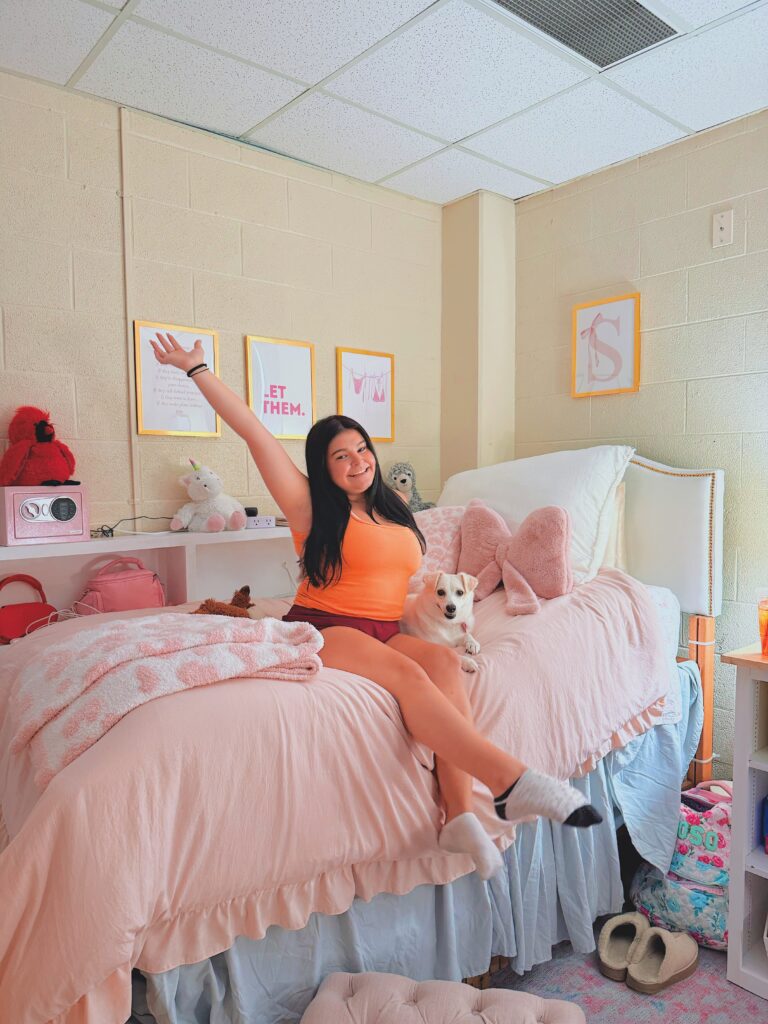
For students like Sophia Xiques (‘29), the ESA program has been life-altering. She adopted her dog, Dolly, from the Blount County Animal Shelter to assist her anxiety.
“She knows when I’m struggling and puts her paw on my chest, reminding me to breathe,” Xiques said. “Dolly keeps me going through the hard moments.”
Yet, the process of getting approval wasn’t easy. Xiques portrays it as “rocky,” involving numerous rounds of paperwork and documentation before receiving approval on her third attempt. She acknowledged the importance of the process but hopes it can be made less confusing for future students.
While Dolly has improved her mental health, Xiques said that having an ESA in a dorm comes with serious responsibilities.
“When people hear I have my dog on campus, they think it’s so cool, but there’s a reality to it,” Xiques said. “Dolly and I have both made sacrifices to be here.” She added that students should ask themselves if having an animal on campus is a need or a want before applying.
Claiborne noted that the distinction between a legitimate need and a personal desire for a pet is one of the most challenging aspects of the policy. “Our goal is to be thoughtful and equitable. We support students with genuine needs while ensuring the policy remains responsible and sustainable for the campus community,” Claiborne said.
He also pointed out to students that ESA approval is not automatic. Submitting documentation begins a review process, not a guarantee. Claiborne said that “students should not purchase or adopt an animal before receiving formal approval.”
As the college continues to evaluate its ESA policy, administrators are considering additional clarity in documentation requirements and campus-wide educations about what ESAs are and what they are not. Xiques suggested one idea that reflects both empathy and practicality: a designated outdoor area where ESAs can safely play off-leash.
“They’re just like us humans,” Xiques said. “They deserve a break from being cooped up all day.”
While most ESA owners on campus are responsible, the small number of policy abusers impact the overall community and slows the process for those with verified needs. Claiborne acknowledged that regulating compassion and accountability isn’t easy, but emphasized the college’s commitment to fairness.
“Each student’s situation is unique,” Claiborne said. “Our job is to listen, evaluate carefully, and maintain a healthy environment for everyone–students and animals alike.”
Photo of Sophia Xiques (‘29) and Emotional Support Animal Dolly. Courtesy of Sophia Xiques