Maryville College sinkhole caused by deteriorating pipes

Students walking between Fayerweather and Bartlett Hall cannot help but notice the giant sinkhole at the edge of the walkway.
On Sept. 15, the facilities operations department sent an email to staff, faculty and students alerting the campus community that a concrete truck would arrive to fill the hole. However, the initial email provided little information about the damage.
Additional information about the hole’s origin has since been released.
“That big hole was technically a ‘sinkhole,’ but not in the usual sense, and it wasn’t in danger of collapsing or anything like that,” said Bo Long, facilities operations manager for mechanical trades. “Still, it definitely needed to be taken care of right away, and we wanted to fix it for good.”
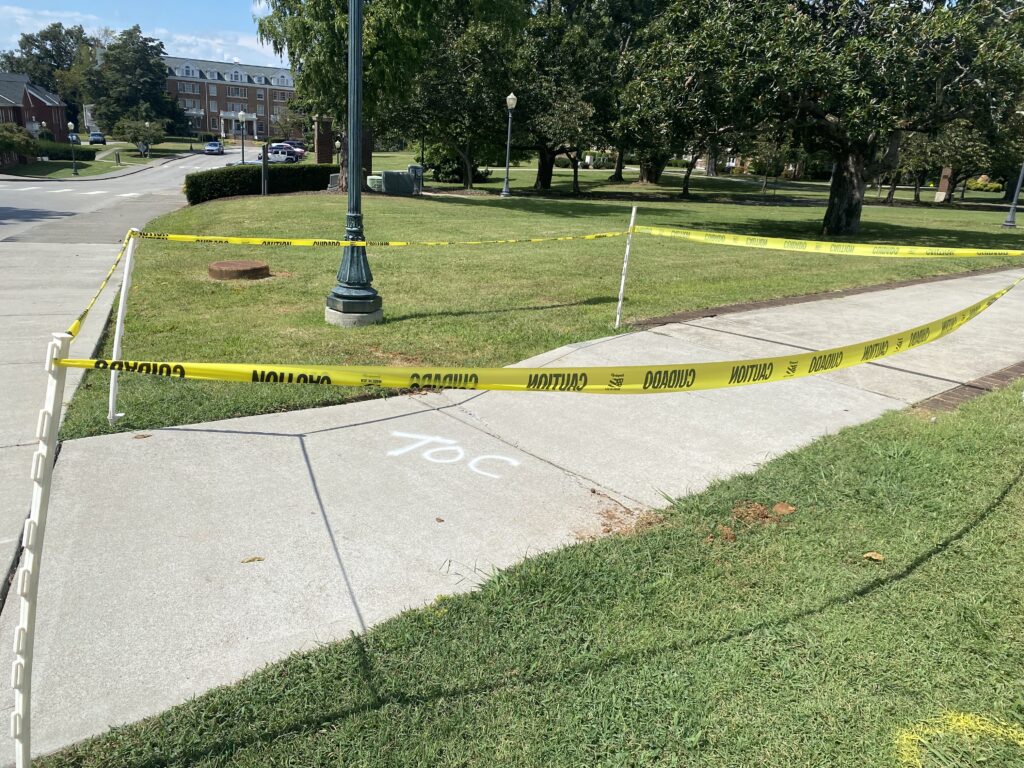
Sep. 3: The sinkhole, causing massive cracks in the sidewalk between Fayerweather and Bartlett is covered in bright yellow caution tape, warning walkers to steer clear
On a 200 years old campus, damage is inevitable, especially when certain systems have been shut off but left underground to deteriorate. That is exactly what happened in this case.
“The campus used to be fully heated by a central steam plant, with miles of underground piping running to each building,” Long said. “These days, a lot of buildings don’t use steam anymore, so many of those old lines have been shut down and left in place.”
“The hole formed right above a main steam line that used to serve Bartlett, Fayerweather, and Cooper. Those buildings switched off steam a few years ago, and the system was cut off at the Carnegie–Beeson intersection.”
Facilities operators maintain that the sinkhole was not dangerous, but it did need to be addressed quickly. Maryville College partnered with Cherokee Millwright, a trusted contractor that provided expediency and expertise, to complete the job.
Sep. 19: Construction on the sinkhole is underway, with the danger zone being extensively blocked off by steel bars and more caution tape.
In the past 15 years, most of the lines have been replaced with active ones, according to Long. This has made them less of a concern than the inactive ones that remain underground.
“The active lines aren’t a major concern,” said Long. “If a problem does occur, it typically becomes evident through signs like dead grass or surface mud. The individual branch lines are much smaller than the main lines, so even in the unlikely event that one completely deteriorates, it wouldn’t significantly displace soil.”
“There’s no plan or practical reason for removal,” Long said. “It’s all iron pipe, which will naturally decompose over time. Removal would not only cost tens of millions but also cause extensive disruption to the campus. Abandoning the lines in place is standard practice in systems like this.”
Because of the remaining underground lines, it is possible but unlikely that this issue could occur again, given the nature of the system and what remains in service.
Long and other facilities operators will monitor the remaining pipes and work to maintain a safe campus for all students, faculty, staff and visitors.
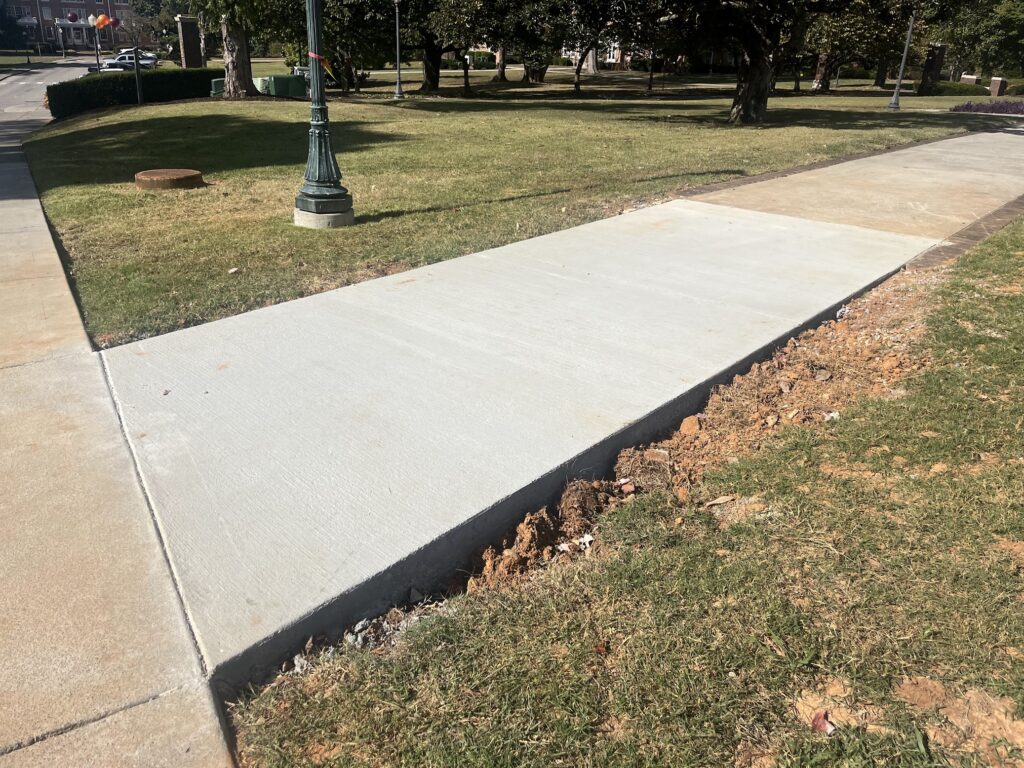
Oct. 13: Construction is now complete, and that specific area of the sidewalk is free and safe to walk on again.
One thought on “Maryville College sinkhole caused by deteriorating pipes ”