Natural resource management suffers in the wake of Trump’s NPS and USFS layoffs
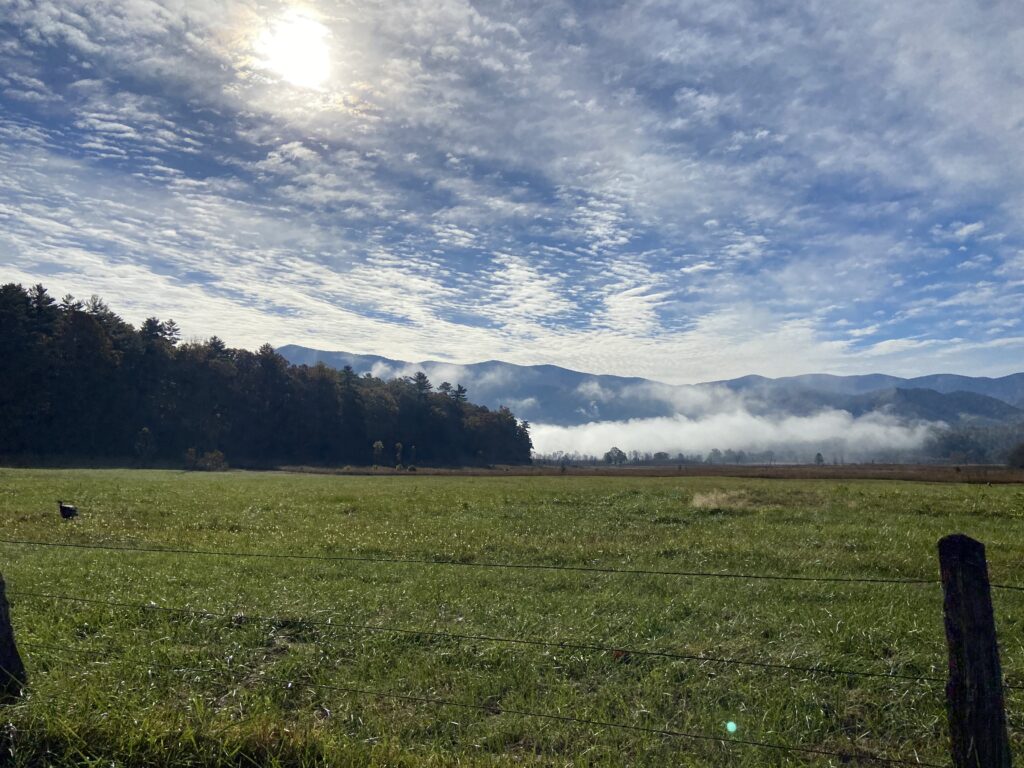
In the midst of the climate crisis, American citizens are seeing environmental issues exacerbated by President Trump’s recent policy changes regarding National Park Service (NPS) and United States Forest Service (USFS) employment that resulted in the termination of over 1,000 NPS employees and even more USFS workers, with those numbers being reported as between 2,000-4,000.
Dr. Mark O’Gorman, professor of Political Science at Maryville College, shed some light on the reasoning behind these cuts as a result of the Trump administration’s 2024 campaign promise to reduce the government.
“The goal is to try to reduce the administrative state, and what that means is that the federal bureaucracy tries to reduce its footprint. The argument is that by doing that, you reduce the amount of spending that is needed from the federal government,” O’Gorman said.
“The argument could be that maybe with significant reductions in government spending, you could get to a place where you could have maybe close to a balanced federal budget.”
The Department of Interior (DOI), the agency containing both the NPS and USFS, is part of the Department of Government Efficiency (DOGE) initiative seeking to reduce government spending.
“The idea is that if you took [the number of employees fired] and multiplied their salary, you get to a number that’s fairly robust, probably in the millions of dollars. Then over the course of the 20, 30, 40 different parts or more of the federal government we have, you could take that savings and say, ‘here’s how much the government can be reduced.’ That’s the fiscal side of it.” O’ Gorman said.
The public outcry and those suffering the loss of their jobs have questioned whether this financial gain truly outweighs the value of these positions, and environmental scientists have raised concerns about the ecological effects of the layoffs, from issues as large as wildfire management to more mundane ones.
Associate Professor of Biology at Maryville College, Dr. David Unger, corroborated these concerns.
“There are a variety of jobs with which most folks are familiar that happen constantly in a national park that will affect the overall health and wellness of the ecosystems in which these national parks are located. Controlling erosion by continual trail maintenance is one…The maintenance of fencing, parking areas, toilet facilities, water systems, waste disposal, etc. all assist in keeping the national park ecosystems healthy and minimize the impact of millions of visitors each year,” Unger said.
O’Gorman also emphasized the importance of NPS staff in ecosystem management.
“The beauty of national parks, or any NPS unit, is that people come to visit. You want people to come there and visit. However, if you have fewer staff, you literally will have less ability to keep more consistent pollution management.”
O’Gorman said this would result in a backlog of garbage that could quickly begin to impact the wildlife in the surrounding area, as well as the park visitor experience.
An immediate ripple effect begins to emerge, as O’Gorman also pointed out that local economies could suffer from decreased tourism to natural areas, and places like Gatlinburg thrive on the participation of tourists to the Great Smoky Mountain National Park (GSMNP) in the economy.
“For the Great Smoky Mountain National Park, there are 12 million visitors every year, the vast majority of them don’t just come and go for a half hour; they stay at Gatlinburg, they go to Dollywood, they hang out and eat at places including here in Maryville. They have a multiplier economic effect. If reducing these jobs makes the quality of the experience at the Great Smoky Mountains National Park less, not as many people will come,” O’Gorman said.
Unger echoed this systemic effect, questioning what the broader impacts of land mismanagement could be.
“If people can’t visit National Parks because they are closed or so mismanaged as to not be enjoyable, what will that do to local economies that rely on visitation?” Unger said.
Despite the economic implications, he also identified a potential ecological benefit of decreased foot traffic to the national parks.
“I don’t think this makes what has occurred a good thing, but if Cades Cove had to close two or three days out of the week because of this reduction in staff, then the Cades Cove ecosystem would, in fact, benefit from reductions in noise, light, and air pollution. What this ultimately means is that the individuals that truly suffer from these layoffs (aside from those that lost their jobs, obviously) are the American people,” said Unger.
He also stated, however, that research and conservation efforts are facing increased challenges due to understaffing and continual climate change. If nothing else, though, Unger sees this as a reality check for the American public.
“I truly believe that we as a species tend to be very reactive. We may be sitting by now complacently while ‘other places’ feel the impact of climate change, but once those consequences start hitting us on a continental scale (and they will), we will, as we have in the past, pull together and make changes to save ourselves. The hope, of course, is that we don’t start those changes too late,” Unger said.
The inevitable changes that will unfold in our national parks will undoubtedly be felt by a community so inextricably linked to the GSMNP as Maryville College. However, Unger said that even those who are looking at the issue from an economic standpoint should be able to acknowledge the benefit of environmental advocacy.
“When politicians choose the criticize environmentalism in the interest of, for example, ‘jobs’, they are ignoring research that shows that there is the possibility of millions of jobs being created by a green economy and renewable energy use, far in excess of those lost by a reduction or elimination of the use of fossil fuels,” Unger said.
The loss of jobs and local revenue also entails the loss of knowledge, as much of the most current knowledge regarding climate change and conservation belongs to the new and transitional employees targeted by these terminations.
“Almost every federal agency so far has had reductions of what has usually been either considered seasonal employees or what’s called probationary employees. The term ‘probationary’ means someone who’s been in a job position one year or less. That could be a seasonal or a temporary, or one year into your career. Where I think they’ve seen some unnerving exceptions is, if you got a promotion within a year then you’re in that category– transitional,” O’Gorman said, highlighting the fact that these lost positions are not as unnecessary as the terms used to discuss them may lead us to believe.
In order to mitigate the impacts of these policies, O’Gorman said that volunteer work will be more important than ever, especially for the MC community due to our proximity to the GSMNP.
“I do think there’s going to be more opportunities that way just because the elimination of the paid jobs might lead to the need for more volunteers to help cover some of the operations. Suddenly you’ve got some students who might be able to help,” said O’Gorman.
Unger urged students to take an active role in advocacy as well by making their voices heard.
“People need to be vocal in their concerns for what’s been done. Contact your local, city, state and national representatives. Post about your concerns, join groups on social media that are being champions of the park service, join rallies, attend protests, etc. If you can’t find a rally or a group with which to join, create one,” he said.
Trump has since reinstated some NPS and USFS positions and has pledged to create more seasonal roles, but the disruption of the parks system will still create lasting impacts.
While climate news is increasingly negative and recent executive orders have made the topic increasingly taboo, it is more important than ever to remember that the protection of our shared environment is relevant to us all. Unger called the idea that people who care about the environment are somehow in opposition to the economy, “simply foolish.”
O’Gorman hopes that communities will collectively realize the value that national parks have historically contributed to our country and work to help them continue for the benefit of all guests.
“ One can only hope over the next four years that people are reminded that national parks are America’s greatest ideas, and to take that moment to step in and do all they can to help,” O’Gorman said.
If you would like to take an active role in helping conserve our country’s natural resources, visit https://www.npca.org or https://friendsofthesmokies.org to find donation and volunteer opportunities.