Out-of-state students feel the chill of the cold months in Maryville
Every fall at Maryville College, a transformation happens: the sun slips away earlier each evening, the mountains fade behind gray clouds, and the temperature begins to drop. For students who grew up in East Tennessee, this is familiar territory. But for students arriving from Florida, Louisiana or other warm-weather states, the first cold snap can feel like stepping into an entirely different – and shocking – climate.
The change hits everyone differently. For some, like Florida native Izzy Freeman (‘28), winter weather isn’t just unfamiliar, it’s uncomfortable on a physical level.
“Being from Florida, I have never had to deal with snow,” Freeman said. “I don’t know how to drive in snow, so whenever it snows here, I avoid driving as much as possible.”
For other students, the adjustment is less about temperature and more about unpredictability. Mariah Maxam (‘28), who moved from Louisiana, said the most surprising thing was how unreliable the weather feels here. She said that the weather can vary from being in the 70s to being 18 degrees in a few days.
“Having to plan accordingly to the drastic changes in the weather was definitely a big adjustment.” East Tennesseans know she’s not exaggerating.
Both students also discussed how light, or the lack thereof, affects them. Freeman mentioned that her mental health shifts when the cold settles in and the sun disappears for days at a time.
“I’m not used to not seeing the sun for days on end,” Freeman said. In Florida, even rainy days come with the occasional burst of sunlight. Here, the rain is cold and gray and it often settles in for a longer period of time.
Maxam, however, found that the weather improved her mental health. “Back home, temperatures would be in the high 90s,” she said. “Here it’s been in the mid-70s, which is so freeing since I’ve lived in 90-degree weather my whole life. If I can get out of sweating from being outside for only five minutes, I definitely will!”
The biggest lifestyle changes come in subtle, everyday ways, such as clothing, exercise and the comfort items students don’t realize they rely on. Freeman said she always carries a jacket now and has accumulated more sweatshirts than she ever expected.
“When it gets chilly, I [don’t] run outside because the cold air makes it harder for me to breathe. So I move my exercise indoors,” Freeman said.
Maxam echoed the need for change in clothing as well. “Even though I’m still not used to the cold after the four years I’ve lived in Tennessee,” Maxam said, “I’m always wearing at least two layers when I step outside.”
There are also the unexpected aspects of daily life in their home state that students miss. Freeman admitted she never thought of herself as a “beach person,” but being away from the coast made her realize how much she valued the option to go to the beach or lake year-round.
When asked whether Maryville College should offer resources to help new students adjust, the answers were mixed. Freeman felt that weather-based resources weren’t necessary, though she admitted snow-driving classes would be helpful.
Maxam, on the other hand, said guidance could make a difference. “Sometimes we aren’t fully prepared because we don’t know what clothes to bring. Helping other students layer up during the cold months would be amazing.”
What becomes clear through their experiences is that adjusting to East Tennessee’s winter isn’t something that happens in a single semester. It’s a slow process of learning how to live in a different climate: physically, mentally and emotionally. But it also becomes part of what ties out-of-state students to the campus, giving them stories and struggles they share with others going through the same transition.
Maxam summed it up perfectly: “One day it’s 73 degrees and the next it’s 18. You just learn to roll with it,” Maxam said.
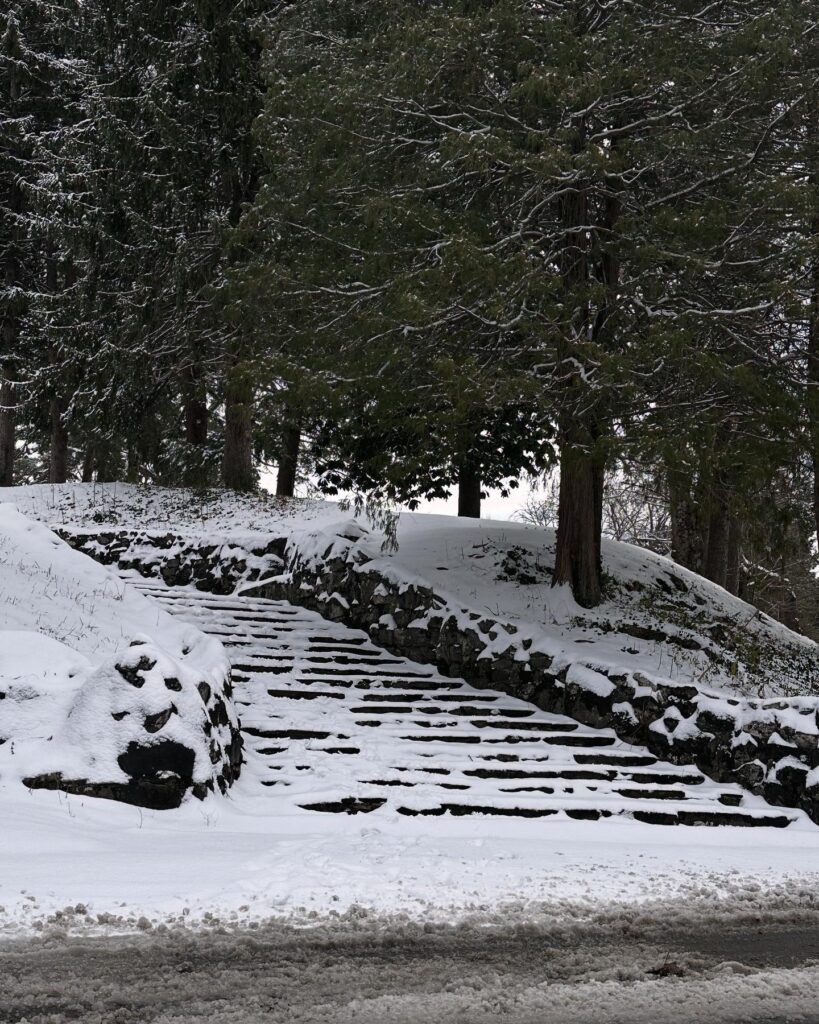
Snow covers the stone staircase behind Carnegie. (Photo courtesy of Ansley Hoard)