The rise, fall, and potential revival of the Chilhowean yearbook on MC campus
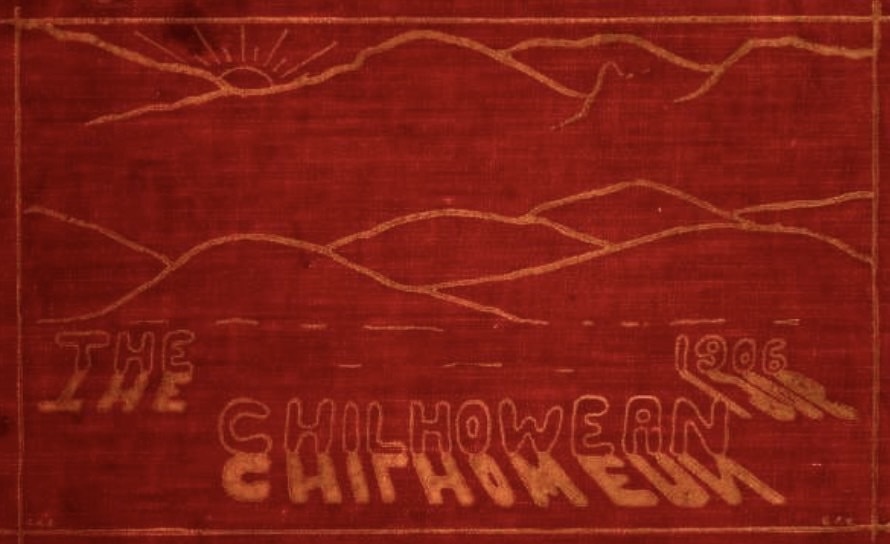
The first Maryville College Chilhowean yearbook was published in 1906, and these books now serve as time capsules for alumni and current students. However, production of the publication came to a halt in 2013. Yearbooks are often considered valuable pieces of history, so why did the college discontinue them?
“A big reason that it died…was that it lacked an academic home,” said Executive Director of Marketing & Communications Karen Eldridge.
Unlike the Highland Echo and Impressions, students who contributed to the Chilhowean didn’t receive any academic credit. While the publication could have provided hands-on experience for students in related majors, the proposal to keep it on campus was ultimately not approved.
“I tried to make the argument that it could be valuable practical experience for a variety of majors, but Academic Affairs didn’t want to take it on, and student interest seemed to fluctuate,” said Eldridge.
Former Chilhowean faculty sponsor Scott Steele witnessed these challenges firsthand.
The rising cost of printing yearbooks was also a deciding factor, as publication costs rose and participation declined.
“The college was covering the full cost of production, and that cost had been rising,” said Steele. “We were also finding that we could not give away all the copies we printed, which meant real money was going to waste.”
Another challenge was the dedication of students to run this publication.
“The yearbook was essentially kept alive by just two dedicated students during my time as sponsor,” said Steele. “Despite their best efforts, getting groups and classes to contribute photos was a constant struggle, and we did not always have a photographer available, so we often had to ask organizations to submit their own photos, with very mixed results. The record we were producing was increasingly incomplete.”
When the remaining two students stepped away, the future became uncertain for the yearbook. Steele said that the decision to discontinue the yearbook was discussed with Vandy Kemp, the dean of students at the time, who supported redirecting funds to other organizations.
Additionally, social media likely had an influence on the decrease of student interest. Though physical media can still serve as a lasting record for the college to look back on, students may be less interested in physical books as more content becomes digitized.
The yearbook remains one of the college’s primary historical records, specifically for the time period before the internet.
The Chilhowean was often the “only reference we had for student life on campus outside of the Highland Echo,” said Maryville College Archivist Amy Lundell (‘06). “It was not unusual that the only evidence of a student organization or a student’s time at MC, especially if they didn’t graduate, was the Chilhowean,” she said.
After 103 volumes containing rich history and tradition, the Chilhowean served as an important primary source for the college, and students may wonder what it would take to bring it back on campus.
“Whenever a student asks about bringing it back, I always tell them that students started it, and students can bring it back,” said Lundell.
A revival of the yearbook is possible, and since we are in the digital age, there can even be alternatives, such as online publishing.
“The easiest option would be to create a digital version, such as a PDF, that I can preserve and host online through the Maryville College Digital Archives,” said Lundell.
This alternative could make it more accessible to students and would likely be more cost effective. It would also be fully searchable and downloadable for anyone that wants to look back on it years later.
For now, the future of the Chilhowean is in the hands of students interested in bringing it back to campus.
“It is one of those things where the value is clearest in hindsight,” said Steele, acknowledging the importance of the yearbook.
Cover art of the first volume of the Chilhowean, 1906. (Photo courtesy of the Maryville College Digital Archives.)