The fear, harassment and community surrounding Yik Yak at Maryville College

“Find your herd” – Yik Yak’s famous motto. But what happens to students when they do? Will the stampede of anonymous opinions run them into the ground, or encourage them to charge alongside the crowd? According to the official Yik Yak website, Yik Yak is an anonymous community app for college students that lets you post, comment and message with anyone assigned a college email address.
“Yik Yak is an anonymous community app for college students that lets you post, comment, and message with your campus,” the Yik Yak website said. “Think campus chatter with real personality and zero name tags.”
Designed for college students, verified with college email addresses and segregated by campus, Yik Yak has become a space for community, self-expression and discussion for college students, alumni and staff. However, through its anonymity, Yik Yak is also home to cyberbullying, gross misinformation and negativity.
College students iphone displays the Maryville College Yik Yak page.
Since 2013, the app has made insidious inroads into campus life at colleges and universities across the country, and Maryville is no exception.
This anonymous, hyperlocal app has become a large part of the Maryville College experience, just as it has at other institutions.
“Yik Yak has been an issue for campus communities since its inception,” Maryville College’s Vice President and Dean of Students, Dr. Ben Stubbs, said. “In that time, I’ve had countless conversations about it, attended conference presentations about its effects, and been shared screenshots related to a very wide range of issues.”
Some campus members recall their experience with Yik Yak in great detail, including one Maryville College student whose entire semester changed after a single post on Yik Yak.
The first-hand effects of Yik Yak
They sit on their bed, their phone on do not disturb, taking a much-needed mental health break from the outside world. It had been a good day, the first after a very rough week.
But that good day, and those few moments of solitude, came crashing down when a Yik Yak post was brought to their attention, poisoning the once serene space with anxiety and dread.
The student found themselves staring at an anonymous Yik Yak post accusing them of sexual assault. Although names are not allowed on Yik Yak, the post’s comment section had been inundated with their initials. Given the smaller nature of MC, it wasn’t difficult to associate them with something horrific.
The post began trending as more comments and replies began to pop up. Personal references pointed back to them, breaking most of Yik Yak’s anonymity guidelines.
It was, for this Scot who wishes to remain anonymous out of concern over those accusations, a college student’s worst nightmare.
“I don’t have Yik Yak on my phone, so having somebody who’s seen everything that is wrong about me before I even knew what I was being accused of was very scary,” the student said.
They sat on their friend’s phone for hours, reading the comments that were continuously coming through and refreshing the trending page, hoping to see the post lose interest.
For days afterwards, they became consumed by the post and obsessed with figuring out what was being said about them on Yik Yak, often asking people what they had seen on the app that day and if the post was still being discussed.
“It was a week of horror,” they said. “I don’t know if I would even wish that on my worst enemy.”
As a last resort, the student filed an official Title IX complaint, despite Yik Yak being outside of Title IX’s jurisdiction due to its anonymity.
“The unfortunate thing with Yik Yak is that, because of its anonymity, it’s difficult for us to do anything Title IX related,” Daniel Roselli (’14), the Title IX coordinator, associate dean of students and director of MC Residence Life, said.
Title IX can always call someone in for a meeting if one person from the party requests it, but apart from taking legal action – such as obtaining a court-ordered subpoena or a restraining order against the individual accused of harassment on Yik Yak – Title IX actions are limited, according to Roselli.
“I always tell students, just delete Yik Yak,” Roselli said. “It’s just people saying the most offhand stuff, because they know there’s really no repercussions, because they’re all anonymous.”
The lack of control Title IX has over Yik Yak is not only discouraging to students who want justice and accountability, but it’s also daunting for Roselli.
“My hands are tied, [because] I don’t know who is saying what,” Roselli said. “It’s unfortunate, and I hate it because I get people in here all the time upset, rightfully so, that people are saying mean things about them, and I just have to look at them and just say, ‘I’m sorry.’ It’s one of those things where I just hate Yik Yak so much.”
The IT department faces similar challenges when it comes to monitoring and regulating Yik Yak.
“If you’re not on the college Wi-Fi, there would be no way for us to monitor Yik Yak,” Ben Howard, director of information technology, said. “Our general policy is to not monitor activity unless there is a specific reason.”
It takes a lot of work to monitor apps like Yik Yak, according to Howard, and the IT department never has a reason to unless the app is causing technological issues, such as security breaches, illegal file sharing or if the app is consuming a massive amount of bandwidth, causing other technology or software to run slowly.
Thus, the Maryville College IT department has neither the incentive nor the ability to block the use of Yik Yak on the Maryville College campus, despite the fears of some users who claim doing so would be a dangerous curtailment of student free speech rights.
“The maximum we could do would be to block it on Wi-Fi, and then you could just turn off your Wi-Fi and access it,” Howard said. “So, from a policy perspective, or really just our opinions as people, … all it would do is create friction between us and students, right? We could turn off your [ability to access Yik Yak on the Wi-Fi], but you would be annoyed that we made that call. It wouldn’t actually protect anybody, it wouldn’t change the nature of the conversation, so it wouldn’t accomplish a whole lot.”
Maryville College does not formally monitor the app, according to Stubbs. However, many staff and faculty members keep close watch of the app.
“I’m on it quite often,” Academic Success Coach Dr. Gretchen Cook said. “I tend to check it every night at the end of the night, just scrolling. And then, I’ll hear things throughout the day, so then I’ll check back. So, I’m on it a lot. Definitely daily.”
This close monitoring is mainly due to her own students’ safety, according to Cook. “It’s kind of like, what can I expect coming in tomorrow? What do I need to have on my radar? Is anybody going to be talking about this?”
According to Cook, students in the Academic Success Center come to her daily with posts they have seen on Yik Yak, positive or negative.
When someone shares information from Yik Yak with MC faculty, they review that information and respond as they are able and as is appropriate, according to Stubbs.
“There was one incident,” Cook said, referring to a Yik Yak post, “It was incredibly egregious. It was very harmful. It was slanderous, and it gave more details about [a specific person] than usual. It was something that could ruin this person’s life, [due to the sexual assault accusations in the post]. So, I did talk to the student about it, and we went to Student Affairs.”
However, much like student affairs has very little control over what happens on Yik Yak, there is also no way for the IT department to trace students on the app back to their Maryville College email, even if they wanted to. The only way to find out an anonymous student’s identity would be to take legal action; it would be in the hands of Yik Yak to trace the college email to the Yik Yak user, not the college.
“Yik Yak operates separately from the college,” Cook said. “That’s what sucks. The college has no control over it, we can’t just say, ‘we’re eliminating this from our campus.’”
However, despite the horrible experience some students have had, others think Yik Yak has proved to be a useful platform for anybody expressing opinions about changes the college has made, or students trying to gather input or student information for school projects.
“I think it’s great for things like statistics projects when people post their links to surveys and such,” Emma Holmes (‘25) said.
After Maryville College selected dining services provider Fresh Ideas over Metz last spring, Yik Yak became a platform for sharing warnings or announcements about the food services on campus. Pearson’s dining hall is a big topic of conversation on Yik Yak, with many students posting about undercooked meat or poorly served food.
“It’s helped spread awareness about certain topics, such as the extremely undercooked chicken,” one student said.
The Fresh Ideas staff is aware of the posts circulating on Yik Yak, but the company’s leadership team on the Maryville College campus does not address the posts on Yik Yak; there are, however, discussions outside of leadership about Yik Yak users’ posts, according to Micah Vitale, director of dining services.
“Yik Yak has made its way into several discussions and has been brought up in the Food Advisory Committee meetings,” Vitale said. “Unfortunately, Yik Yak is not specific to just the Maryville College student body. It does seem there is quite a bit of false and/or exaggerated information in the posts that have been brought to my attention.”
This recurring misinformation has sparked skepticism around what’s being posted on the app, causing students to heavily consider what they are reading before automatically believing it.
“How seriously I take something that is posted about an organization or a student depends on what is being alleged,” one anonymous user said. “ More serious accusations, I tend to be skeptical and search for more proof or others’ anecdotal experiences. But sometimes, with non-serious allegations, I believe it pretty quickly and move on.”
Despite the misinformation and negativity, some users find use and comfort in Yik Yak.
“[Yik Yak is] a good way to get things off your chest anonymously,” another anonymous user said. “I check [Yik Yak] once a day or every other day, typically; not too much, but not never. It does get brought up occasionally in conversation, mostly just the funny stuff.”
Another student agreed.
“In my opinion, I haven’t considered anything I’ve seen here to be intense harassment of any sort. I guess it just depends on an individual’s level of sensitivity,” the user said. “I read Yik Yak as entertainment. I also think it provides a sense of camaraderie when we’re able to talk about general issues or campus-wide happenings.”
Other students disagree.
“I see what I would consider hate or bullying almost every time I open the app,” a first-year student at MC who wishes to remain anonymous said. “Sometimes it’s being hateful to a group, or sometimes they’ll point out a single person without saying their name. I’ve talked to several people in person about when people have talked about me and how it hurt, and every single one came back and said that someone on Yik Yak had talked about them negatively, too.”
It’s not just the first-years who are experiencing negativity on the app, either.
“I had to stop checking it every day because I noticed the negativity was really eating at me, especially during election season when that’s the only thing people would talk about,” Holmes said.
It’s the opinion of many students and Yik Yak users that, without the anonymity of the app, Yik Yak could still serve as a platform for community and unity without all the negative repercussions.
“Anonymity is the bad part,” Michael Howard ‘28 said. “If it weren’t anonymous, people would be held accountable for their actions.”
Holmes agreed, saying, “I think it’s great for things like statistic projects when people post their links to surveys and such, but since it’s anonymous, I feel like it doesn’t bleed into day-to-day interactions much, unless you’re someone that gets bullied on this app frequently, then I would say it definitely can impact an individual’s feelings about their place at MC.”
Bullying and targeting aren’t limited to Yik Yak, however, and Maryville College students have long found ways to gossip about one another far before 2013. Before the proliferation of cell phones, students turned to the one form of mass communication that was known by all: The Highland Echo.
Dating all the way back to 1915, when The Highland Echo first started, students have been using the written word to spread information and sly comments throughout campus.
“The number one place we get information (about campus life) is The Highland Echo,” Amy Lundell, the Maryville College archivist, said. In the early editions of The Highland Echo, students would have columns in The Echo to share silly comments and random anecdotes that were often witty and snarky.
“That is, I believe, the closest thing you’re going to get to anything like Yik Yak,” Lundell added. “Everybody read it. This is how you found out what was going on.”
The Maryville College campus used to be full of student connections and relationships on a far more personal level than it is today, according to Lundell.
“[There were no phones,] so you wouldn’t even text,” Lundell said. “So what happens when you get out of class, as you’re packing your bag away, you’re not looking at your phone, you don’t put on your headphones[…] so you’re going to talk to people. There was definitely more conversation between classes. There was inevitably someone yelling [at their buddy] across campus.”
That extroverted atmosphere at Maryville is not what it used to be, according to Lundell, making the college a lot less personal and a lot more cynical. The Maryville College Yik Yak is an outgrowth of this.
The Maryville College campus’s Yik Yak has been notoriously negative compared to other colleges in the area, such as the University of Tennessee, Knoxville.
“Overall, at least a year and a half ago, when I was regularly checking it, I think that the UTK Yik Yak was incredibly positive, more so than ours,” Cook said. “It’s so much more anonymous and just more generic than it is here.”
The larger student population at UTK also makes it harder to distinguish identities.
“I always hear from other students about how you can guess who’s posting [at Maryville College], but over here, it’s truly anonymous,” TJ Williams, a senior at the University of Tennessee-Knoxville, said.
There are currently ongoing attempts from both students and staff to make Yik Yak a more positive – or less frequently used – platform, aiming to revive positivity and foster relationships between peers.
“We’re going to start small by trying to help promote positivity on Yik Yak,” Director of Counseling Claudia Werner said. “We plan to make posts on [other social media platforms] and put things out there to get people thinking about how they can rise up and report things that are negative, and be there for and support the people that are being bullied.”
Werner also hopes to recruit mentors or leaders from SGA and other student organizations to promote positive things on Yik Yak.
Howard has already taken drastic steps in this direction, posting on Yik Yak daily under the username “joybaiter1.”
“The reason I started the ‘joybaiting’ thing was mostly to create a more healthy and positive environment on Yik Yak,” Howard said. “I thought, if we are going to use this app, why don’t we do something good with it? I get that people are going through things and that Yik Yak is a space where people can freely post about their issues. I know the benefits of it. I just think that we can all foster a more accepting community in a time where the outside world is so divisive and negative.”
Even then, some students have expressed their dislike for Howard’s “joybaiting,” saying it is forceful and obnoxious to flood the platform with seemingly mundane things. But despite the pushback, Howard continues to post.
“Happiness is an emotion, but I think joy is an active choice,” Howard said. “Grudges travel quickly across a campus this size, but that’s also why I did this. I think joy can travel quickly, too. Hope is more powerful than hate.”
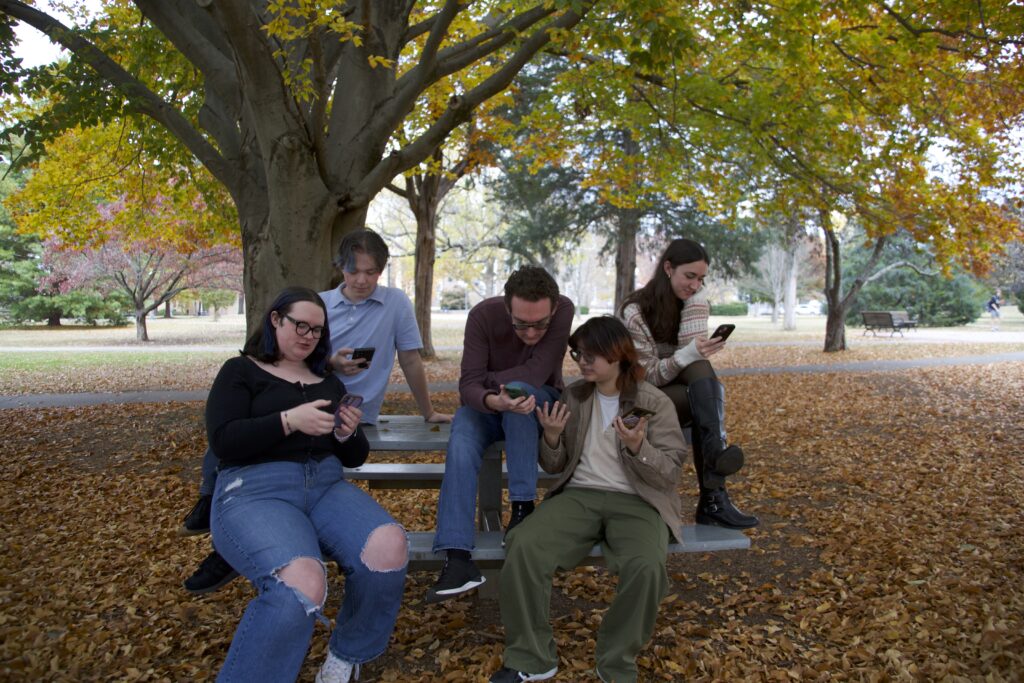
College students iphone displays the Maryville College Yik Yak page.