The history of thelong-standing MCsmokestacks
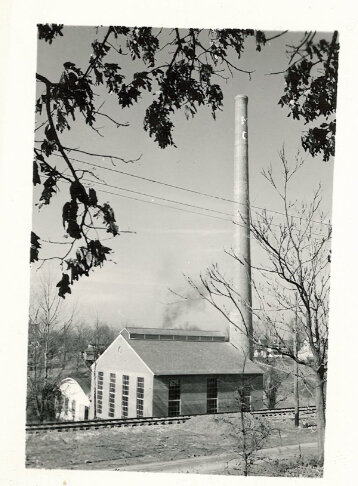
Standing near Carnegie Hall, two brick smokestacks dominate the campus skyline, one branded with “MC,” and one holding no markings at all. Since smoke no longer pours out of these chimneys, it is easy to forget they were once a key component of the campus’s steam plant.
Prior to 1939, the campus smokestack was near Anderson Hall. This structure was seen as an extreme eyesore by many, and in several older college photographs, the chimney was even photo-shopped out by hand.
The current day steam plant was constructed near Carnegie Hall in 1939. During the construction of this plant, only one stack was deemed necessary; but in 1951, another was added for efficiency. During this early period, these chimneys were the home for coal heated broilers.
According to MC Archivist Amy Lundell (’06), the plant was intentionally built near railroad tracks that formerly ran behind Carnegie Hall. This placement meant coal could be easily dumped down the hill to make shoveling easier. During the 1982 World’s Fair, however, the steam plant transitioned away from coal use, and into the use of wood chips for power, as wood was a much greener alternative. After the transition from coal to wood, the plant transitioned again from wood to natural gas. This transition made the steam plant safer and more efficient.
Facilities Operations Manager for Mechanical Trades, Bo Long, stated that the plant used to be manned “24/7, even on Christmas.” This was due to the risk of heating-related fire or even explosions. The plant now only needs to be checked on periodically to make sure it is running properly.
There are nine campus buildings still operating on the steam plants system: Thaw, Carnegie, Sutton, Copeland, Clayton, Pearsons, Gamble, and the Willard House. While this seems like a large portion of the campus, MC Facilities intends to eventually transition away from steam entirely. This is largely due to the risk factor the steam plant carries. If it were to malfunction, the aforementioned buildings would be without heat until the plant is repaired.
The shift also factors in student comfort. Every two-pipe building run by the system can only heat or cool, but cannot run both simultaneously like newer four-pipe buildings. While the shift from heat to cool in two-pipe buildings is not labor intensive, it can only be done so often to protect the integrity of the pipes. The shifting from heat to cool, or vice versa, causes the pipes to expand and contract. This repetitive expansion and contraction can cause the pipes to leak and in more severe cases burst. While these problems usually occur after years of too-frequent switching, they are still destructive.
Long compared it to smoking cigarettes: “While it might not kill you today, it will probably kill you in fifty years,” he said. This hesitance to switch often leaves students feeling that their dorms are too hot or cold during the shift in seasons.
Since the College’s long-term goal is to move away from the steam plant altogether, what does this mean for the historic smoke stacks? Being made of brick and mortar, they are constantly being eroded by weather. This erosion is greater towards the top, and was the sole reason for their lowering, which happened in 2015. This lowering was quite laborious: bricks were removed from the top, pushed into the smokestack, and pulled from the bottom. Due to further erosion, another lowering like this one will be needed in the future to maintain their structural integrity. To many, these smokestacks are such a memorable part of campus, and their removal isn’t fathomable. However, it is likely inevitable as their slow erosion becomes dangerous and their upkeep more expensive.
One singular smokestack stands near Carnegie Hall in 1939, before a second was deemed necessary.
Photo Courtesy of the Maryville College Archives
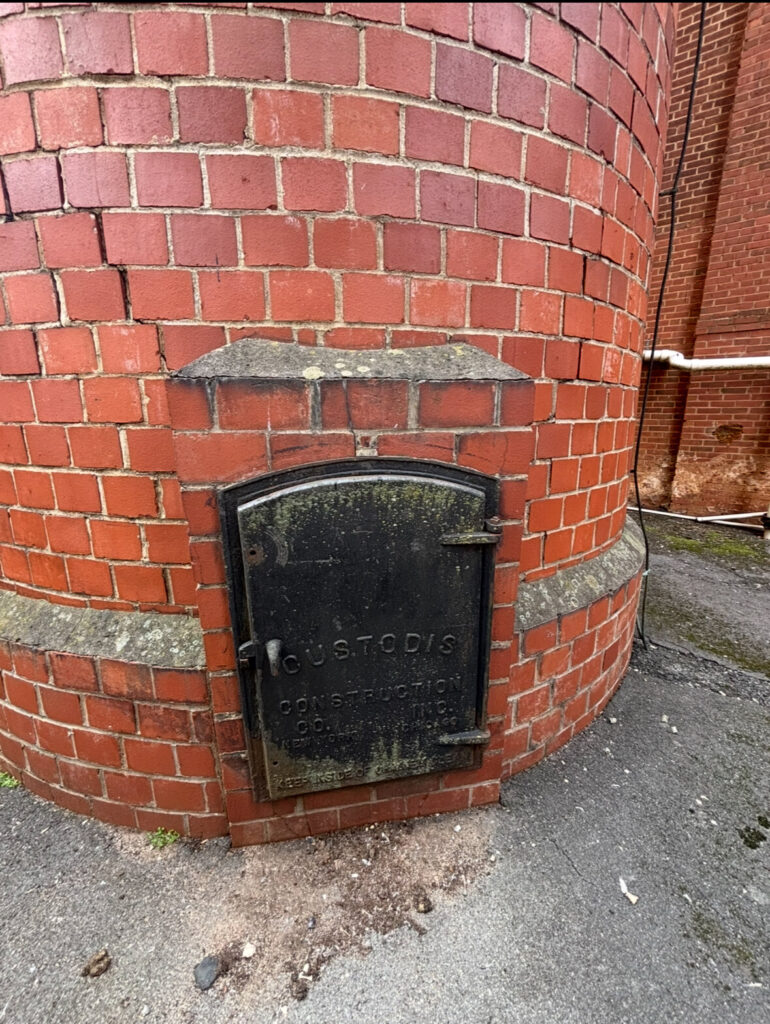
Clearly aging brick and mortar near the bottom of one Maryville College’s smokestacks. (Photo Courtesy of Finch Peddicord.)